

The US midterm election results 2026 are in. Americans voted on November 3, 2026, and the results have redrawn the balance of power in Washington. According to results reported by the Associated Press, Democrats won control of both the House of Representatives and the Senate in the 2026 midterm elections — a result that changes how the United States will be governed for the next two years.
The outcome matters well beyond the United States. For readers in the UK and Canada, a new Congress means a different approach to trade, tariffs, foreign policy and the debate over the war with Iran — issues that reach across the Atlantic and across the US-Canada border. In this explainer, we set out what happened, what the results mean, and what happens next, based on the results as reported by the Associated Press.
Results at a glance: the 2026 US midterm elections
- House of Representatives: Democrats won control, with about 231 seats reported — a majority in the 435-seat chamber.
- Senate: Democrats won control, with about 54 seats reported — a majority in the 100-seat chamber.
- Races still to be decided: some contests had not been called when the results were reported, so the final seat totals may move slightly as counting and certification continue.
- President Trump: President Donald Trump said he would accept the results.
- What happens next: the new Congress convenes on January 3.
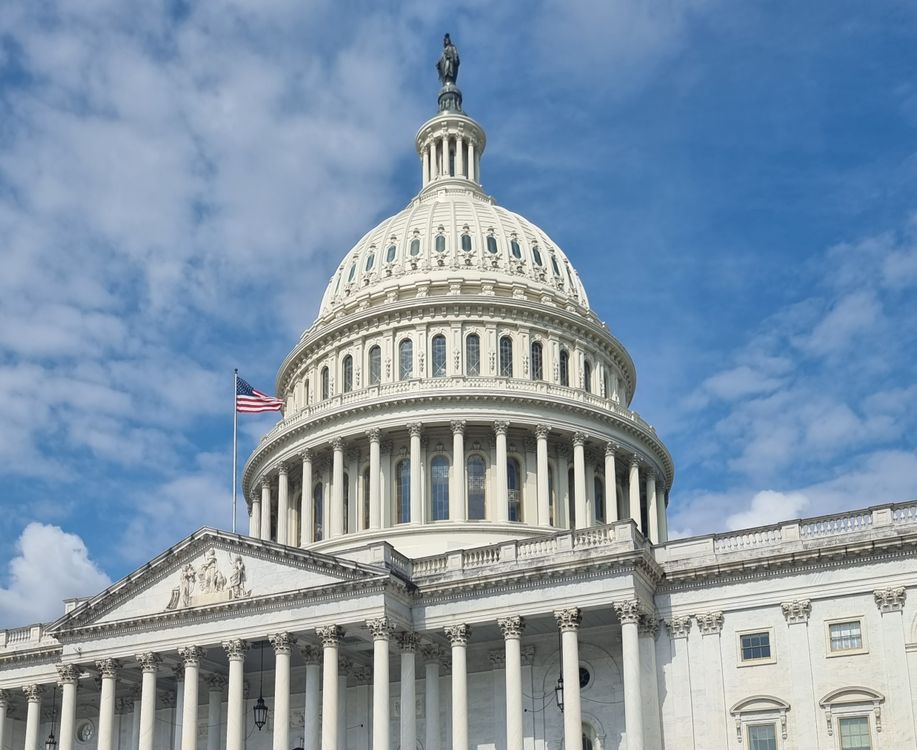
Photo: Ivan Dražić / Pexels. The US Capitol in Washington DC, where the new Congress will convene on January 3.
What is a midterm election?
Midterm elections are held halfway through a president’s four-year term. In 2026, voters chose all 435 members of the House of Representatives and about a third of the 100-member Senate, along with state governors and many state and local offices. Because the House and Senate together make up Congress, the party that controls them decides which bills reach a vote, which issues get investigated and how much of a president’s agenda becomes law.
That is why midterms are often described as a verdict on the president’s party. In 2026, that verdict — as reported by the Associated Press — was a Democratic victory in both chambers.
What a Democratic Congress means for the next two years
Winning both chambers gives Democrats control of the agenda in Congress. The party will chair the committees, decide which bills come up for a vote and set the terms of debate in the House and the Senate. But control of Congress is not the same as control of the government: President Trump remains in the White House, and he can veto legislation he opposes. That means the next two years are likely to be shaped by negotiation, stalemate and compromise, rather than by one party getting everything it wants.
Legislation, oversight and the president’s agenda
With Democrats setting the agenda, bills the president supports will need Democratic backing to pass. At the same time, the new majority is expected to use its oversight powers — hearings, investigations and requests for documents — to scrutinise the administration’s decisions. For voters, the practical effect is a slower legislative process and more public argument over the direction of the country. Budgets and government funding, which Congress must approve, are likely to be the biggest flashpoints.
The Iran war debate
One of the sharpest debates facing the new Congress concerns the war with Iran. Control of Congress gives Democrats a stronger voice over war powers, military funding and the terms of any future settlement. Lawmakers in both parties have argued about how much say Congress should have over military action, and that argument is now likely to move to the centre of Washington politics. For background on how the conflict reached this point, see our earlier report: Iran US War News Today: Ceasefire Collapses as Tensions Escalate Again.
US-Canada trade and tariffs
Trade is the issue that matters most directly to readers in Canada. The United States is Canada’s largest trading partner, so any change in US tariff policy — or in the terms of North American trade — is felt quickly in Canadian jobs, prices and exports. A Democratic Congress is likely to take a close interest in trade deals and tariff policy, and Canadian businesses and governments will be watching every step. For readers in the UK, the same logic applies on a smaller scale: US trade policy shapes global markets, and a Congress that questions tariffs may take a different line from one that backs them.
What it means for the UK
For the UK, the main effects are indirect but real. A new Congress can change the tone of US foreign policy, the approach to allies and the handling of trade. British businesses that sell into the US market, and British readers who follow American politics, will find the next two years more unpredictable — but also more open to debate, with two parties sharing power in Washington.

Photo: Mikhail Nilov / Pexels. A voter holding a US election ballot.
Election season also brings a wave of scam emails and messages pretending to be about voting, donations or results. If you receive a message claiming to be about the election, pause before clicking any link — our guide explains how to spot a phishing email in 2026.
What happens next?
Until January 3, the outgoing Congress remains in office. In that period, the current Congress can still pass legislation, including funding bills, while the incoming members prepare to take their seats. Once the new Congress convenes on January 3, the new House and Senate majorities will elect their leaders, organise their committees and set out their priorities for the next two years.
Readers should also expect the final seat counts to be confirmed in the coming days and weeks. Some races were still to be decided when the Associated Press reported the results, and counting, certification and any recounts can still move the numbers slightly. The headline, however, is settled: Democrats won both chambers.
Frequently asked questions about the 2026 midterm results
Who won the 2026 US midterm elections?
According to results reported by the Associated Press, Democrats won control of both the House of Representatives and the Senate, with about 54 Senate seats and 231 House seats reported. Some races were still to be decided.
When does the new Congress take office?
The new Congress convenes on January 3. Until then, the outgoing Congress remains in office.
What does Democratic control of Congress mean?
It means Democrats will set the agenda in both chambers — chairing committees, deciding which bills are voted on and leading oversight of the administration. The president can still veto legislation, so major changes will need agreement between Congress and the White House.
Can the results still change?
The overall outcome — Democratic control of both chambers — has been reported by the Associated Press. But with some races still to be decided, the exact number of seats held by each party may change slightly as counting and certification finish.
What does this mean for Canada and the UK?
For Canada, the key issue is trade and tariffs: the US is Canada’s largest trading partner, and Congress has a major say in trade policy. For the UK, the effects are mostly indirect — through trade, foreign policy and the tone of the US approach to its allies.
Conclusion: a new balance of power in Washington
The 2026 midterm elections have produced a new balance of power in Washington. Democrats now control both the House and the Senate, with about 54 seats in the Senate and 231 in the House, according to results reported by the Associated Press, and President Trump has said he will accept the results. The next two years will be defined by the negotiation between a Democratic Congress and a Republican president — over spending, oversight, the war with Iran and trade with Canada and the rest of the world. The new Congress convenes on January 3, and that is when the real work begins.