

President Donald Trump has predicted that an agreement to end the war in Ukraine could be reached soon, and that it might involve all of Europe, after a private meeting at the White House with Kirill Dmitriev, the envoy of Russian President Vladimir Putin.
Trump met Dmitriev on Thursday, November 5, 2026, after both attended a rare White House event hosted by First Lady Melania Trump. Speaking to reporters afterwards, the president declined to reveal what he had discussed with the Russian envoy, but said the war was close to being settled and that a deal could emerge soon.
The meeting was the first in-person contact between senior Russian and American officials since the Democrats won control of both chambers of Congress in the midterm elections on November 3. It came as the United States prepares to mediate a new round of talks between Russia and Ukraine in Abu Dhabi on November 10 and 11, the first trilateral peace discussions since February.
For a war now in its fifth year — Friday marks day 1,714 of Russia’s full-scale invasion — even the suggestion of a breakthrough matters. But Trump has predicted a deal was close before, and Thursday’s meeting produced no publicly announced settlement and no nationwide ceasefire.
What Happened at the White House
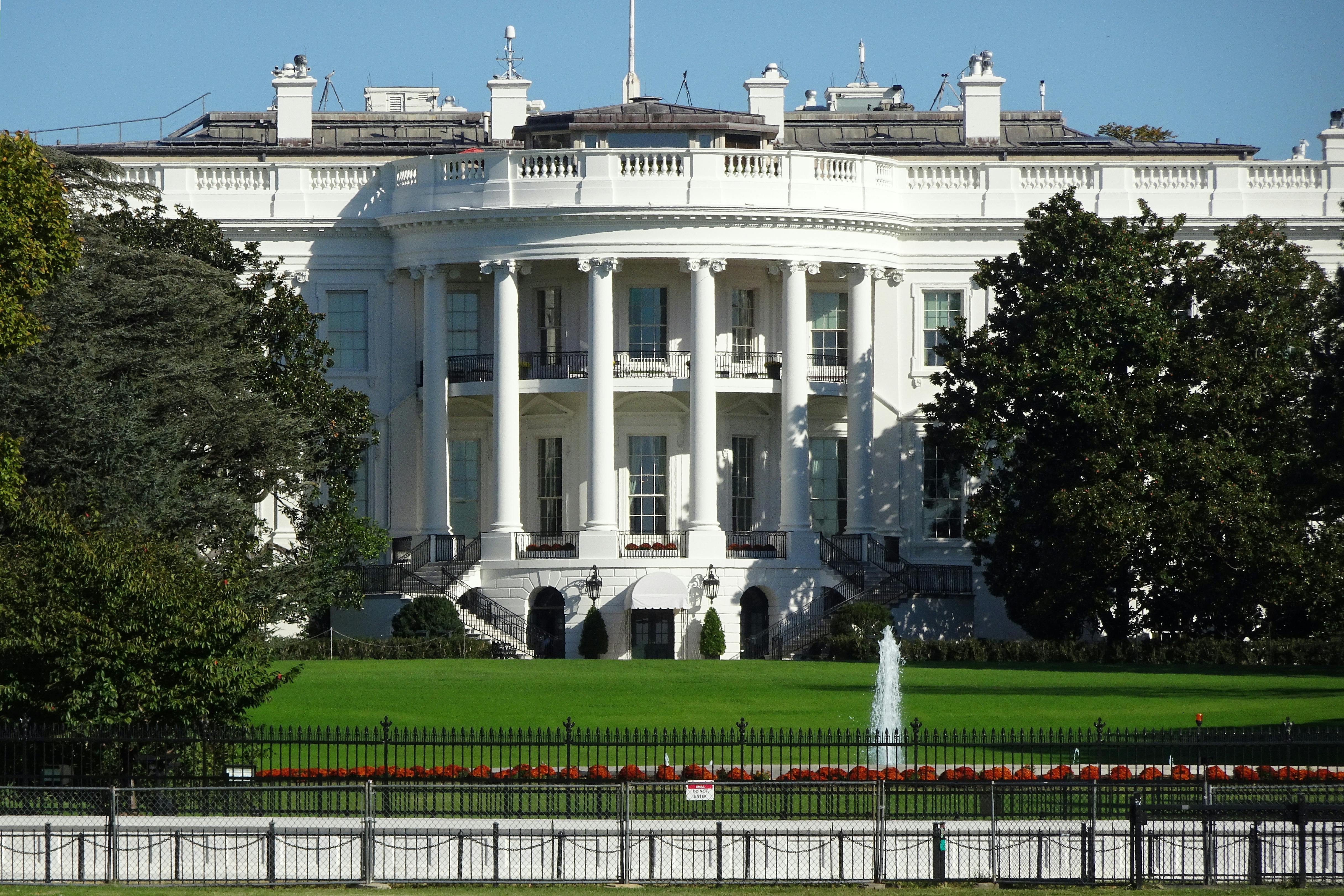
Photo by Gu Bra on Pexels
Dmitriev, the director general of the Russian Direct Investment Fund and one of Putin’s most trusted envoys, was in Washington for an event marking a six-day ceasefire in the Russian-occupied city of Oleshky, in southeastern Ukraine. The temporary pause, which the first lady helped to broker, had already expired on Sunday, November 1, but the White House used the occasion to bring Russian and Ukrainian officials into the same room — a rare face-to-face encounter between the two sides on American soil.
Ukrainian representatives attended the event alongside Dmitriev. Trump, however, confirmed that he did not meet the Ukrainian delegation on Thursday. His private conversation was with the Russian envoy alone, a detail that will not have gone unnoticed in Kyiv or in European capitals, where officials have repeatedly warned that no deal about Ukraine should be struck without Ukraine.
“It is going to be a big agreement, and it is going to involve more than Ukraine,” Trump told reporters, according to Reuters. He offered no details of the terms, no timetable, and no list of the countries that would be party to such a deal. His envoy Jared Kushner added that American officials had held “productive and substantive discussions” with Ukraine, NATO and European partners in Brussels on Thursday, focused on security guarantees for Ukraine and a broader European security framework.
A Ceasefire in Oleshky — and Melania Trump’s Role
The White House event that brought Dmitriev to Washington was unusual in its own right. It was hosted by the first lady to recognise a temporary ceasefire in Oleshky, a city in the Russian-occupied part of Ukraine’s Kherson region, where fighting had paused for six days under an arrangement she helped to negotiate.
Dmitriev publicly thanked Melania Trump at the event and said Putin had personally given instructions to ensure the ceasefire was implemented. The six-day pause covered a single city, not a wider truce, but the White House presented it as evidence that dialogue between the two sides is still possible.
For the Trump administration, the Oleshky episode serves a political purpose as well as a humanitarian one. It allows the president to point to a concrete, if small, result from his diplomacy. Trump promised during his 2024 campaign that he could end the war quickly. Nearly two years into his second term, the fighting continues, and his critics — including many Democrats who will take control of Congress in January — argue that his approach has tilted too far towards Moscow.
Abu Dhabi Talks on November 10-11

Photo by Karolina Grabowska on Pexels
The next real test comes next week. A United States delegation is scheduled to mediate negotiations between Russian and Ukrainian representatives in Abu Dhabi on November 10 and 11. The Russian delegation is expected to be led by Vladimir Medinsky, according to reports, and the talks are the first trilateral meeting of the parties since February.
The agenda covers security guarantees for Ukraine and a broader European security framework — the two issues that have blocked every previous attempt at a settlement. Ukraine wants guarantees that would prevent Russia from attacking again after any ceasefire. Russia wants limits on Ukraine’s military ties to the West and recognition of its territorial gains. Europe wants a seat at the table and a say in any arrangement that affects the continent’s security.
Kushner said Washington would consult European partners alongside the Abu Dhabi talks and seek their direct participation if negotiations progressed — a promise that will be tested quickly, since European governments have made clear they do not want a deal imposed on Ukraine, or on them, by Washington and Moscow alone.
Ukrainian President Volodymyr Zelenskyy has said the talks should come before any possible meeting between the United States, China and Russia at the APEC summit in Shenzhen, and that Ukraine must adapt to the new political realities in Washington after the Democrats’ midterm victory.
What a Broader European Deal Could Mean
Trump’s suggestion that an agreement could involve “all of Europe” is the most striking part of his remarks, and also the least explained. No American official has said what such a deal would cover, which countries would sign it, or how it would relate to the existing security architecture of NATO and the European Union.
One reading is that Trump is talking about a grand bargain: a settlement in Ukraine wrapped into a wider understanding between the United States, Russia and Europe on security, trade and arms control. Dmitriev has been working for months to convince Washington that peace in Ukraine will first require trade deals between the United States and Russia — a message he carried to Moscow when he met American envoys Steve Witkoff and Jared Kushner there about two months ago. Another reading is simpler: that Trump was speaking loosely, as he often does about negotiations, and that the “big agreement” is an aspiration rather than a plan. He has repeatedly predicted that a Ukraine deal was close, only for the fighting to continue and the talks to stall.
Why Kyiv and Europe Are Cautious
Ukraine’s caution is easy to understand. Kyiv has watched previous rounds of talks produce announcements that did not survive contact with the battlefield, and it has seen ceasefires broken within hours. The Oleshky pause lasted six days and covered one city. A nationwide ceasefire, let alone a lasting peace, is a different order of challenge.
Europe’s caution has a different source. Officials in Brussels, London, Paris and Berlin have spent the past year building up their own defence plans, partly because they no longer trust Washington to guarantee European security on the old terms. The Kremlin’s spokesman, Dmitry Peskov, said on Friday that Moscow hoped Trump would continue his peace efforts despite the midterm results, and that nothing had changed in Washington as far as Russia was concerned. That message — that Moscow will work primarily with the president, whatever Congress does — will worry European governments that fear being sidelined.
The Midterm Factor
The timing of all of this matters. The Democrats’ victory on November 3 has changed the politics of American foreign policy, even if it has not yet changed its substance. As we explained in our report on the president’s final two years, losing both chambers leaves Trump legislatively a lame duck, with a hostile Congress, a 33 percent approval rating and a funding deadline on December 11. Foreign policy is one of the few areas where a president can still act largely on his own — and that may be one reason Trump is pushing so hard on Ukraine now.
But the midterm result also constrains him. The new Congress takes office on January 3, 2027, and Democrats have already promised tough oversight of his administration, including investigations into his conduct of the war and his dealings with Russia. Any Ukraine deal that required congressional funding, sanctions relief or a change in American law would need Democratic support — support that is far from guaranteed.
That creates a window, and a deadline, for the president. If he wants a deal, he has roughly two months to get one before the new Congress is seated. If the Abu Dhabi talks fail, or produce only another round of promises, the politics will get harder, not easier.
What Happens Next
The immediate focus is Abu Dhabi. The talks on November 10 and 11 will show whether the optimism Trump expressed at the White House is shared by the negotiators in the room, and whether Russia and Ukraine are prepared to discuss the hard questions — territory, security guarantees and the future of Ukraine’s relationship with the West — rather than simply restating their positions.
Beyond that, three things are worth watching: whether European governments are brought into the process or left to react to a deal struck over their heads; whether the new Democratic Congress, once seated in January, supports or obstructs whatever emerges; and whether the fighting on the ground changes — a genuine ceasefire would be the clearest sign that this round of diplomacy is different.
For now, the facts are these: Trump met Putin’s envoy, said a deal was close, and pointed to talks in Abu Dhabi next week. Everything else — scope, terms, timing — remains unsettled.
Sources: NPR — Melania Trump touts rare agreement she brokered between Russia and Ukraine; Le Monde — 2026 midterms: Russia hopes Trump continues ‘peace efforts’ despite Democrats’ victory.