
Abdul El-Sayed wins Michigan Senate seat on November 3, 2026, defeating former Representative Mike Rogers in the election, and becoming the first Muslim to serve in the United States Senate. CNN projected his win on November 4, 2026.
The result is a historic first. El-Sayed, 42, a progressive Democrat and former public health official, was born in the United States to Egyptian parents and is a practising Muslim. His victory in Michigan comes after a campaign in which President Donald Trump repeatedly attacked him over his Muslim faith, including calling him a “jihadist” at rallies in the final weeks of the race.
El-Sayed’s win was part of a wider Democratic success in the 2026 midterm elections. As reported in Gloz News’ coverage of the US midterm election results for 2026, Democrats won control of both chambers of Congress, and they also won Senate seats in states including Texas, where Texas turned blue as Democrats won a Senate seat for the first time in 30 years.
A historic first for the US Senate
When El-Sayed takes his seat, he will be the first Muslim to serve in the US Senate. No Muslim has previously served in the chamber, and his election marks a milestone in American political history.
El-Sayed, who previously served as a public health official, ran as a progressive Democrat. During the campaign, he argued that voters were most concerned about everyday costs and services — affording gas and groceries and being able to see a doctor — and he said the focus on his name and his faith was a distraction from those issues.
His victory in Michigan was confirmed after the November 3 vote, with CNN projecting the win on November 4. He defeated Rogers, a former Republican congressman, in a race that had drawn national attention in its final weeks because of the language used about El-Sayed by the president.
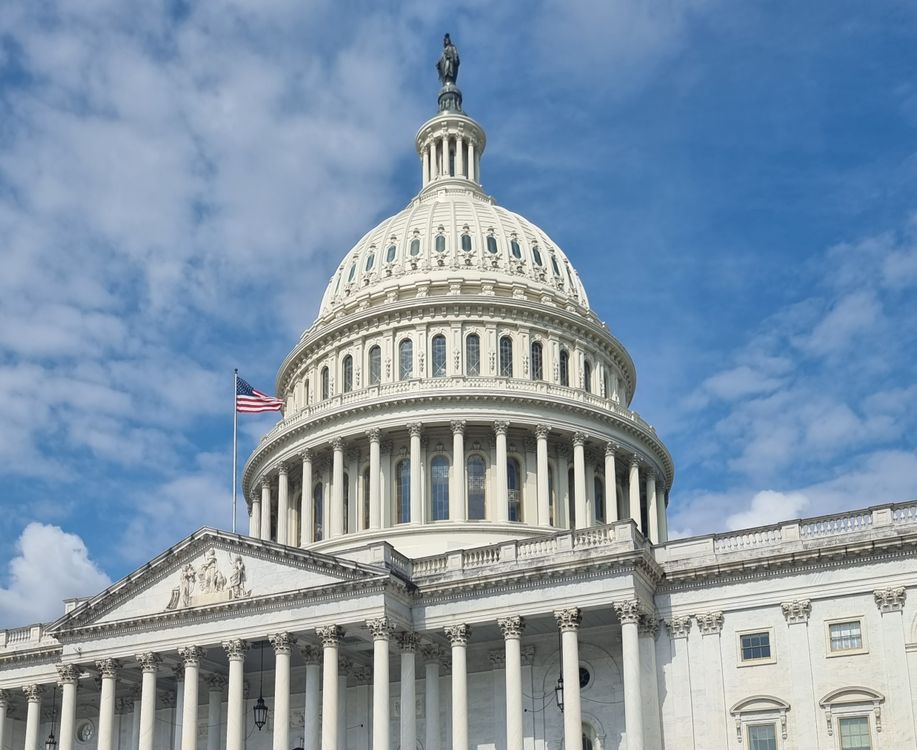
The dome of the United States Capitol building in Washington DC. Photo: Ivan Dražić / Pexels
What Trump said at the Port Huron rally
The most widely reported attacks came at a campaign rally in Port Huron, Michigan, on October 25, 2026. There, Trump repeatedly called El-Sayed a “jihadist” and said he “would be the only senator that will have to go through a metal detector before he’s allowed to go into the Senate.”
According to The Guardian, Trump also invoked the September 11 attacks at the rally, drawing a comparison with the passengers who fought back aboard United Flight 93. He warned that if El-Sayed and the Democrats won, they would “open the floodgates and invite hordes of jihadis to our shores, creating a nightmare of violence and terror until you cannot even have a Christmas.”
The remarks were reported widely and drew criticism, but Trump did not stop there. The attacks continued in the final days of the campaign, with the president repeating the “jihadist” label and adding new claims about El-Sayed’s name, his faith and his supposed political associations.
The attacks escalated in the final days
At a rally in Dubuque, Iowa, on Sunday, November 1, 2026, Trump repeated the “jihadist” label and suggested El-Sayed was a member of the Muslim Brotherhood — a group El-Sayed has disavowed and says he has no relationship with. USA Today reported on November 1 that Trump had launched Islamophobic attacks on El-Sayed in the closing days of the campaign.
At a Mar-a-Lago Halloween party on Saturday, October 31, Trump claimed El-Sayed wanted to introduce Sharia law in Michigan. At a Fox 2 Detroit rally on October 25, Trump mocked El-Sayed’s name as “Abdullah… Bah bah bah.”
The remarks about El-Sayed’s name followed an earlier episode. At a campaign rally in Dalton, Georgia, on October 16, 2026, Trump joked about the popularity of the name Mohammad among Muslims: “If you’re in doubt about somebody’s name from the Middle East, just say ‘Mohammad.’ You have about a 65% chance. ‘Hello, Mohammad.’ I’ve done it for years now. I’ve never been wrong.” The remarks were reported by The Jerusalem Post on October 17, 2026.
Backlash, including from Trump’s own former supporters
The attacks drew criticism from across the political spectrum, including from people who had previously supported Trump. Bishara Bahbah, founder of Arab Americans for Trump — the group that led Arab American outreach for Trump in 2024, since renamed Arab Americans for Peace — called the president’s statements “out of line” and “crossing a red line,” describing them as “racist.”
Senator Bernie Sanders, appearing alongside El-Sayed, said: “The reason they are using Islamophobia against Abdul is because they have nothing to say about the real issues.”
El-Sayed was not the only target of such language during the campaign. Vice President JD Vance said in August that there was something “very, very evil” about El-Sayed, and Senator Ted Cruz called him a “jihadist leprechaun.” The repeated use of the word “jihadist” by senior Republicans became one of the most discussed features of the Michigan race.
El-Sayed’s response: “Call me senator”
El-Sayed responded to the mockery of his name directly. At his Grand Rapids rally, he said of his name, “I don’t even care that he remembers my whole name because he can just go on and call me ‘senator’ after November” and “I’ll be Senator Mohamed to you, bro.”
He said the focus on his name and faith was a distraction from issues like affording gas, groceries and seeing a doctor. Rather than answering the attacks in kind, he returned repeatedly to the cost of living and access to health care, arguing that those were the questions voters wanted answered.
On “The View”, El-Sayed renews his challenge to Trump
The story did not end on election night. On Wednesday, November 5, 2026, El-Sayed appeared on “The View” and renewed his challenge to the president: he will walk through a metal detector all day because he has nothing to hide, so long as President Trump sits for a lie detector test.
According to the New York Post’s report on November 5, El-Sayed said his first questions for Trump would be about Jeffrey Epstein and whether Trump won the 2020 election. The exchange turned Trump’s own Port Huron remark — that El-Sayed would have to go through a metal detector before entering the Senate — back on the president, and it gave the senator-elect a message for Trump in the first days after his win.
The appearance underlined how El-Sayed has handled the attacks throughout the campaign: by answering them directly, and by linking them back to questions he says matter more to voters. He has presented the metal detector remark not as an insult to avoid, but as a challenge he is willing to meet — provided the president meets one of his own.

A voter casting a ballot at a polling station. Photo: Mikhail Nilov / Pexels
The attacks backfired, critics and supporters say
One of the clearest features of the result is that the candidates Trump targeted over their Muslim faith won their races. In the same election, Representative Rashida Tlaib won re-election in Michigan’s 12th district with 84.8% of the vote, and Representative Ilhan Omar was also re-elected.
That pattern is central to how the Michigan result is being read. Critics of the attacks argue that the focus on El-Sayed’s faith and name did not persuade voters, and may have helped him by drawing attention to his campaign and by prompting a backlash from voters who objected to the language. Supporters of El-Sayed make a similar point: that the attacks gave him a platform to answer them, and that his answers — about his name, his faith and the cost of living — reached voters who might not otherwise have heard them.
What happens next
El-Sayed will now prepare to take his seat in the Senate, where he will be the first Muslim senator in American history. He will join a Democratic majority in Congress, following the wider midterm results, and his election will be watched closely as a test of how the new Senate approaches health care, the cost of living and the other issues he campaigned on.
Frequently asked questions
Who won the Michigan Senate race in 2026?
Abdul El-Sayed, a progressive Democrat and former public health official, won the Michigan US Senate seat on November 3, 2026, defeating former Representative Mike Rogers. CNN projected his win on November 4, 2026.
Is Abdul El-Sayed the first Muslim in the US Senate?
Yes. When he takes his seat, El-Sayed will be the first Muslim to serve in the US Senate. He was born in the United States to Egyptian parents and is a practising Muslim.
What did Trump say about Abdul El-Sayed?
At a rally in Port Huron, Michigan, on October 25, 2026, Trump repeatedly called El-Sayed a “jihadist” and said he “would be the only senator that will have to go through a metal detector before he’s allowed to go into the Senate.” He repeated the label at a rally in Dubuque, Iowa, on November 1, suggested El-Sayed was a member of the Muslim Brotherhood — a group El-Sayed has disavowed — and claimed at a Mar-a-Lago Halloween party on October 31 that El-Sayed wanted to introduce Sharia law in Michigan.
What is El-Sayed’s lie detector challenge to Trump?
Appearing on “The View” on November 5, 2026, El-Sayed renewed his challenge: he will walk through a metal detector all day because he has nothing to hide, so long as President Trump sits for a lie detector test. He said his first questions would be about Jeffrey Epstein and whether Trump won the 2020 election.