

NOWY LIPOWIEC, Poland — A Russian missile in Poland crashed into a field in this quiet village in the country’s southeast on Friday morning, exploding loudly enough to shake nearby houses and scatter debris across farmland. It was one of three Russian weapons that crossed into the territory of a NATO member during the biggest Russian air attack on Ukraine in months — and Poland’s prime minister says it was no accident.
Prime Minister Donald Tusk said Warsaw knows “for sure” that the weapons came from Russia and described what happened as “an intentional provocation”. NATO Secretary General Mark Rutte called the incursion a “grave violation” of Polish airspace, and allied fighter jets were scrambled in response.
Nobody was hurt in Poland, and officials said no critical infrastructure was damaged. But the incident has pushed Europe’s worst security fear — a Russian weapon landing on NATO soil — back to the centre of the continent’s politics, a day after Trump sat down with Putin and Xi Jinping in China and declared the meeting a success.
What happened in Poland on Friday morning
The objects crossed into Poland in the early hours of Friday, November 20, during a huge overnight Russian bombardment of Ukraine. Defence minister Wladyslaw Kosiniak-Kamysz told a press conference that three objects had violated Polish airspace: a Russian Kh-101 cruise missile, a second object most likely also a missile, and a third most likely a jet-powered drone.
The confirmed Kh-101 came down near Nowy Lipowiec, in Bilgoraj County, roughly 50 to 60 kilometres from the Ukrainian border. Residents reported a whistling sound, then a dull thud, at about 6:30 a.m. local time. The mayor of neighbouring Aleksandrow county said an object about seven metres long had fallen at 5:40 GMT.
The second object came down near Rudnik nad Sanem, and the third, the suspected jet-powered drone, fell at Molodycz. All three sites were secured and the Lublin district prosecutor’s office opened an investigation.
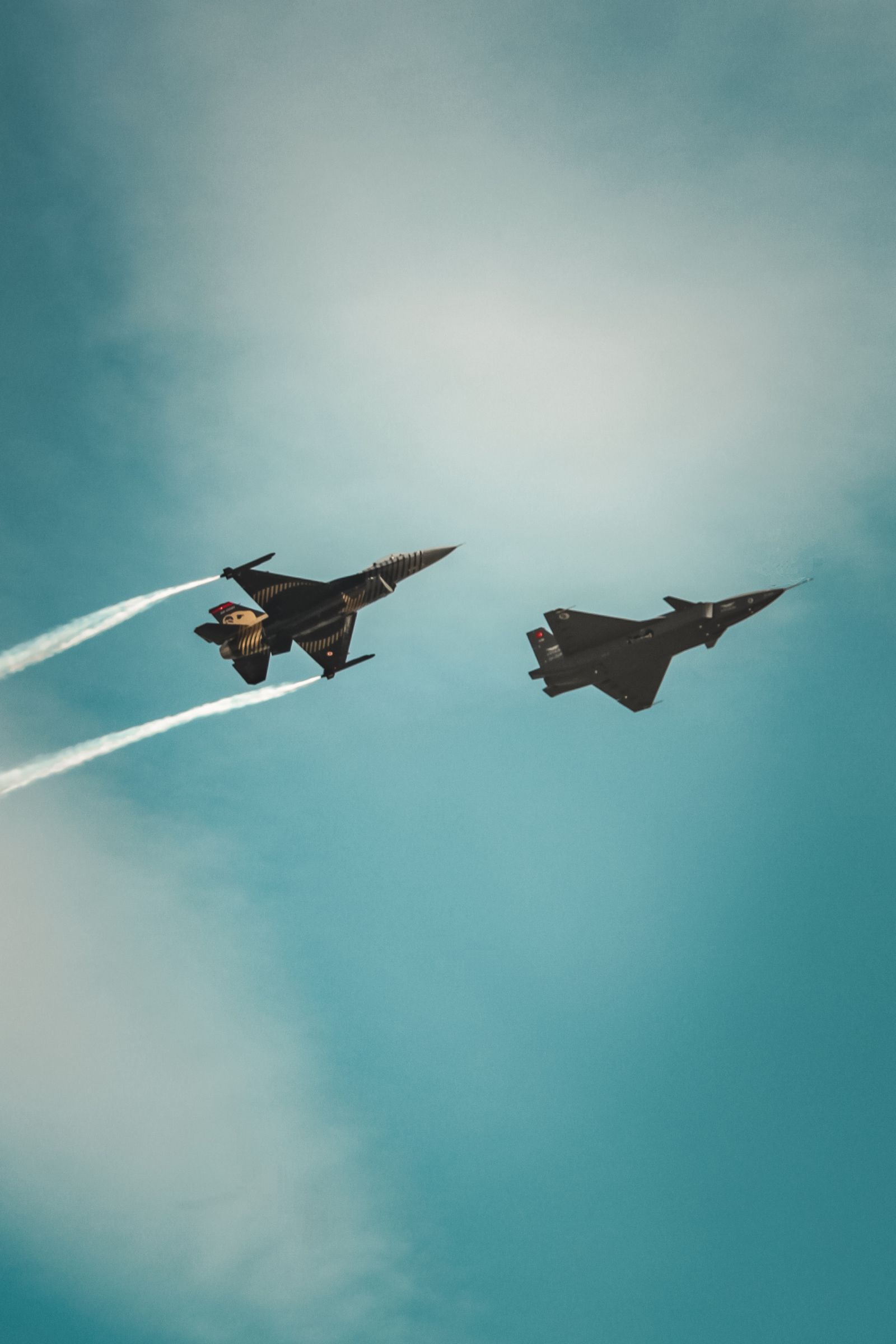
Poland’s military said 11 objects had threatened Polish airspace during the night and three crossed the border, all travelling at more than 800 kilometres per hour. The Kh-101 spent about three minutes over Polish territory; a Swedish Gripen closed in, but poor weather stopped the pilot from identifying it visually, and nobody fired. Polish F-16s and Swedish Gripens patrolled through the night, Patriot batteries were activated around Rzeszow-Jasionka airport, and two NATO AWACS aircraft were operating over Poland. By mid-morning, Tusk said the immediate threat had passed.
Tusk: “This does not look like a coincidence”
Tusk did not hesitate over how to describe what had happened. “It seems we are dealing with an intentional provocation,” he told reporters in Warsaw after convening an emergency meeting of ministers, military commanders and security chiefs. “We know that what landed on Polish soil came from Russia. Therefore — and this is not just my own assessment, but also that of our foreign partners, including those within NATO — it does not look like an accident.”
The objects fell on the same day that thousands of troops from 11 countries were taking part in a major military exercise in southeastern Poland, at Nowa Dęba — about 35 kilometres from one of the impact sites. The exercise, Koalicja 26.2, runs from November 9 to 22 and is the first big test of the Coalition of the Willing, the British- and French-led group preparing a possible multinational force to support Ukraine after a ceasefire. Tusk said it was “no coincidence that these objects landed near the site where military manoeuvres by a ‘coalition of the willing’ supported by Polish troops are taking place”.
It is important to be clear about what is proven and what is not. Poland has confirmed that a Russian Kh-101 missile came down on its territory, and its allies agree on the weapon’s origin. But no evidence has yet been made public that proves the missile was deliberately aimed at Poland, rather than a weapon that went off course during the attack on Ukraine. Tusk’s description of the incident as an intentional provocation is Poland’s assessment, not an independently established fact. Moscow had not commented by Friday afternoon.
NATO’s response: jets up, reinforcements requested
NATO’s reaction was swift, if measured. Rutte said he had spoken with Tusk “about the grave violations of Polish airspace overnight” and that NATO jets had been scrambled in response. “This incident is clearly dangerous — a consequence of Russia’s ongoing war against Ukraine,” he wrote on X. “We stand in solidarity with Poland and will continue to strengthen our ability to deter and defend.”
Poland said it would formally ask NATO for more support for Operation Eastern Sentry, the mission launched in September 2025 to guard the alliance’s eastern flank after Russian drones crossed into Polish airspace. Warsaw wants heavier AWACS coverage to pick up incoming weapons earlier, and Kosiniak-Kamysz said he would also seek an extraordinary meeting of NATO member states.
British Prime Minister Andy Burnham called the incident “utterly unacceptable”, and several European defence ministers are expected in Poland this weekend.
The alliance has been here before, and recently. In September 2025, about 20 Russian drones crossed into eastern Poland, NATO jets shot several down, Poland invoked Article 4 — the clause providing for emergency consultations — and Eastern Sentry was set up. No decision has yet been reported to invoke Article 4 over Friday’s incident, and there are no current plans to invoke Article 5, the collective-defence clause under which an attack on one ally is treated as an attack on all — a political decision all 32 members must agree to.

The attack on Ukraine behind it
The Russian missile in Poland arrived during one of the largest Russian air attacks of the war. According to Poland’s military, Russia fired 26 Kalibr cruise missiles, 72 Kh-101 cruise missiles and more than 500 drones at Ukraine overnight, launched with a record seven long-range bombers. Other counts cited more than 400 drones and 110 missiles.
In Kyiv, at least eight people were killed and 28 injured, according to President Volodymyr Zelenskyy, and three bridges across the Dnipro River were damaged. The barrage came just hours after President Vladimir Putin sat down with President Donald Trump and Chinese leader Xi Jinping at a summit billed as a chance to talk about peace.
It came days after Ukraine struck the bridge linking Russia and Crimea for the third time in a week, hitting its railway section and halting train traffic. Putin had vowed to retaliate for the bridge strikes. Zelenskyy, for his part, said the Russian leader’s attempt to “redraw the world” with his Chinese and American counterparts at the summit had been a “failure”.
A split with Washington
The incident has also exposed a gap between Warsaw and Washington — and it is one Tusk aired in public. “There is an incident that requires a response, but our allies, for example the United States, do not want to overreact,” he said. “They do not want that response to trigger another spiral of escalation, and I understand that. But I do not always, to put it mildly, agree with the American side’s assessment.”
Hours before the missiles landed, Trump told Fox News aboard Air Force One that Putin had been “landing drones in Poland and a couple of little missiles, by mistake” — supplying Moscow’s excuse before Moscow had even offered one. Tusk’s answer, posted on X, was short: “God, protect us from such friends.”
The friction sits awkwardly with the mood at the Shenzhen summit, where Trump greeted Putin as “my friend” and later scored the meeting 12 out of 10.
The question now is whether the United States treats a Russian missile on NATO soil as a provocation to be answered, or as a mishap to be managed. Trump, so far, has said nothing about Friday’s incident in public.
What happens next
Investigators are still working at the three impact sites, and prosecutors expect to finish searching the Nowy Lipowiec site by Saturday evening. Rutte arrives in Warsaw on Saturday for talks with Polish leaders, and the Koalicja 26.2 exercises will go ahead as planned — a deliberate signal that Warsaw will not be intimidated into cancelling them.
Poland wants more NATO air cover and will probably get some of it, most likely extra AWACS aircraft and fighter patrols. Whether allies agree to a formal Article 4 consultation, and whether the incident changes the terms of the Ukraine peace talks Washington is mediating, is less certain.
For now, the fields around Nowy Lipowiec are cordoned off and the debris is being collected, while a village most Europeans had never heard of has become the latest test of whether NATO’s eastern flank is a red line or a grey zone.
This is a developing story. Gloz News will update this report as investigators release more information and as NATO’s response becomes clear.