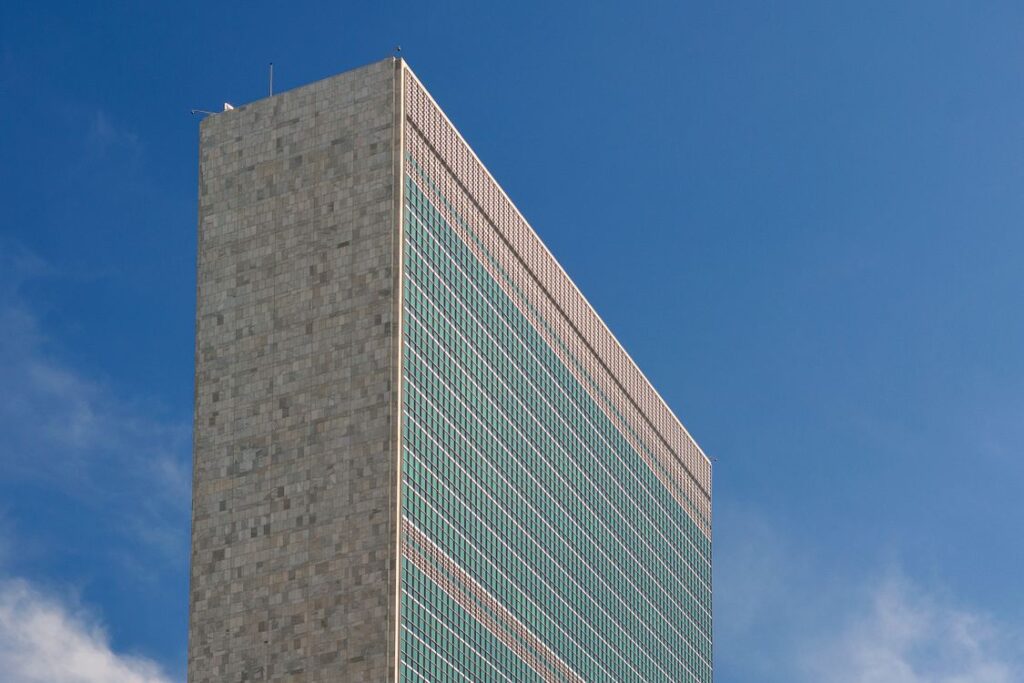
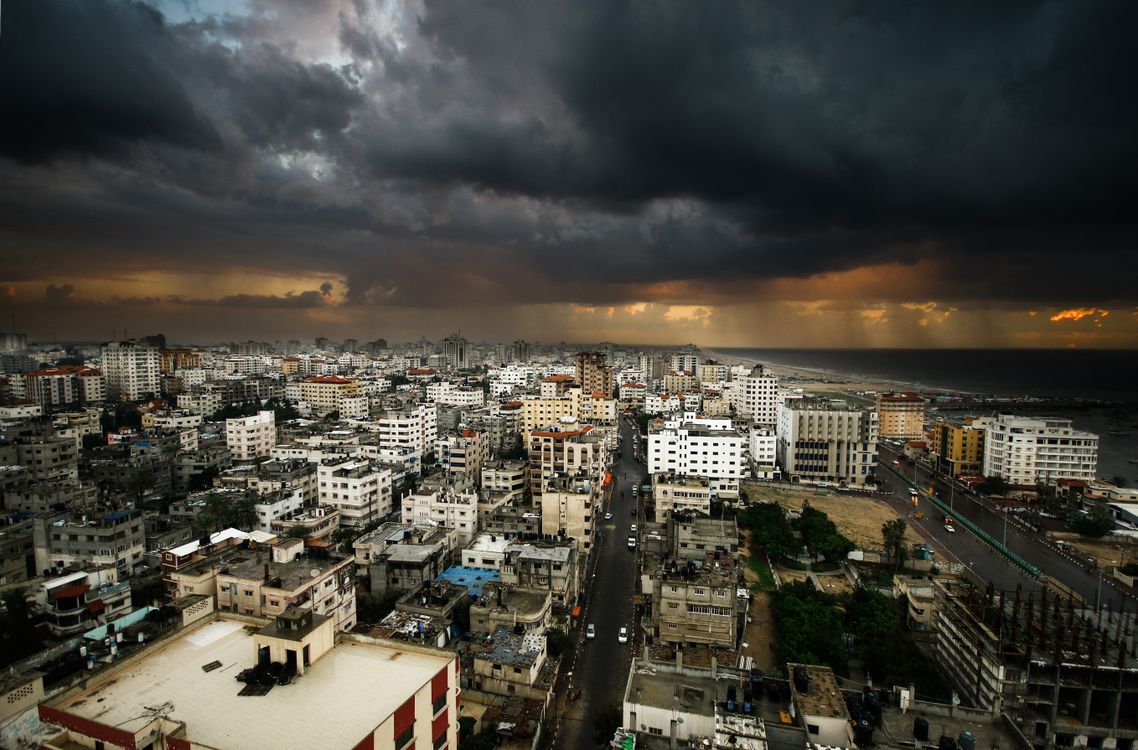
JERUSALEM — The body created by US President Donald Trump to oversee the end of the war in Gaza has delivered its bluntest warning yet: the ceasefire is in danger of collapse, and both Israel and Hamas are to blame. In a 12-page report to the United Nations Security Council, submitted on Tuesday, the Board of Peace says the gap between what the two sides promised and what is actually happening on the ground is now the main threat to the entire peace process.
“The distance between what has been agreed and what is happening on the ground nonetheless remains the principal risk to the process,” the report says, according to Reuters. It warns that “a ceasefire that delivers nothing visible cannot be sustained indefinitely” — and that if it falls apart, there will be nothing left to rebuild from. “Should it collapse, there would be no road map to return to, no administration to deploy and no enabling environment to rebuild.”
The Associated Press obtained a copy of the report, the board’s second to the Security Council since the US-backed ceasefire came into effect 13 months ago. The board is expected to present its findings to the council in New York at the end of November. The truce began on October 10, 2025. It halted the fighting but delivered almost none of what was supposed to follow.
What the Board of Peace report says
The report’s central charge is that the wider peace plan has “effectively stalled since soon after it came into effect last year”. The ceasefire stopped the major offensives, but the second phase of the deal — under which Hamas would disarm, Israeli troops would withdraw and rebuilding would begin — has barely moved. The board says the deadlock itself has become the danger.
The report faults both sides in the same breath. It says Israeli strikes against Hamas targets have continued throughout the truce, and that Hamas militant activity has continued too, so that “the commitment to cease all military activities has not been met in full by the parties”.
It also takes direct aim at Israel’s government over policing. The report criticises an “absence of decisions” on arrangements to train and deploy a civilian Palestinian police force that would replace Hamas as Gaza’s law enforcement authority. Without a police force, there is no one to keep order where Hamas fighters still operate and Israeli troops still control roughly two-thirds of the territory behind the so-called Yellow Line.
The disarmament deadlock: who moves first
At the heart of the stalemate is a single question with no agreed answer: who moves first? In July, Hamas agreed to a 15-point roadmap drawn up by the board under which it would surrender its weapons and transfer the governance of Gaza to a civilian transitional authority. Israel rejected the roadmap within days, saying it will not withdraw its forces until Hamas is dismantled. Hamas, in turn, links disarmament to withdrawal.
The board’s own position, set out in the report, is that full withdrawal beyond the Yellow Line will not take place until the disarmament to which Hamas committed is completed. That puts the board closer to Israel’s sequencing than to Hamas’s. But the board also makes clear that a truce that exists only on paper cannot hold.
The deadlock is not only about guns. Reconstruction has not begun at all, despite a 2.45 billion dollar recovery plan presented in September 2026. The civilian administration meant to run Gaza — the National Committee for the Administration of Gaza, led by Ali Shaath — has nothing to administer and no reconstruction to oversee. The report sets no hard deadline, but its message is that time is itself running out.
1,649 killed since the truce began
The human cost of a ceasefire that has not become a peace is visible in the casualty figures. Gaza’s Government Media Office said on November 16 that 1,649 Palestinians have been killed and 5,969 wounded since the ceasefire took effect, with 6,233 ceasefire violations documented. Five Israeli soldiers have also been killed in the same period, according to Reuters. The office is run by the Hamas authorities, so its figures are contested, but they describe a truce in which the killing never fully stopped.
Those deaths have a political effect as well as a human one. Each strike hardens the argument, on both sides, that the other cannot be trusted to keep its word. Each side’s actions feed the other’s case for standing still. The cycle is self-reinforcing, and the board’s fear is that it ends not with a negotiated breakthrough but with a slow slide back into open war — a war for which, the report notes, there would be no agreed framework to stop it a second time.
Another winter in tents and rubble
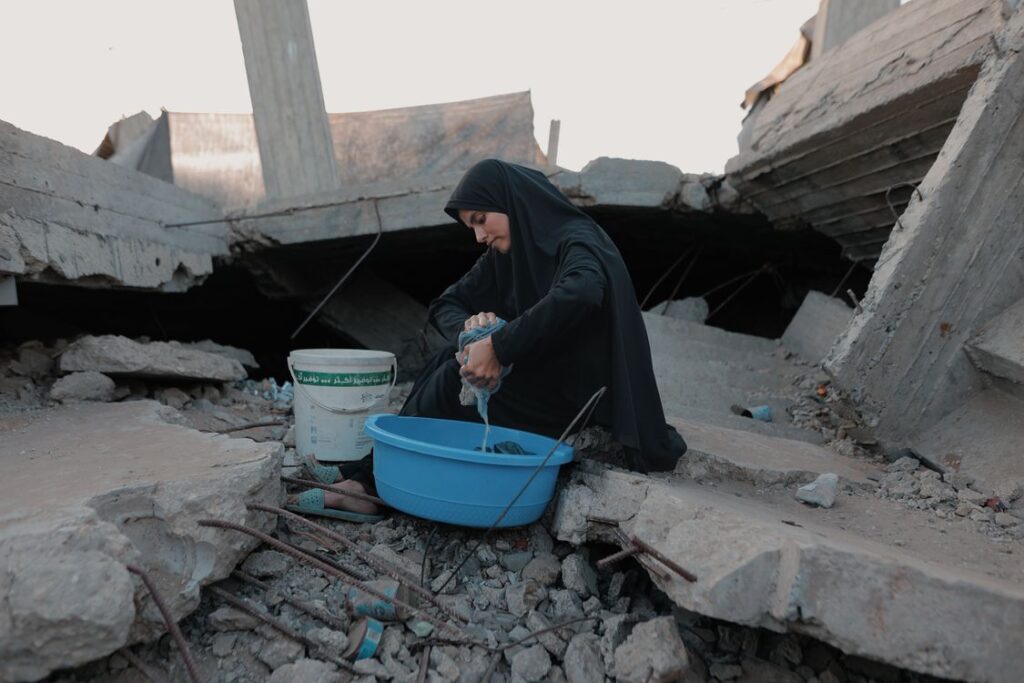
For the people of Gaza, the most immediate consequence of the stalemate is the winter now arriving. The report says the population faces “another winter in tents and rubble”, with aid restrictions and funding shortfalls paralysing winter preparations. About 65 percent of Gaza’s population — roughly 1.4 million people — now live in tents or makeshift shelters, according to the UN’s aid coordination office.
The scale of the shortfall was laid bare just days ago, when the foreign ministers of the United Kingdom, Canada, Australia and Italy issued a rare joint demand telling Israel to open Gaza’s crossings at once. They said 150,000 tents waiting at the border were being held up while families slept in tents that were already leaking, collapsing or washing away, after the first winter storm flooded thousands of shelters. The board itself had already demanded the same shelter materials be allowed in. The fact that it is now repeating its own demand in a formal report to the Security Council shows how little has changed.
What is the Board of Peace?
The Board of Peace was created in 2025 at Trump’s behest to oversee the Gaza ceasefire deal and the territory’s reconstruction. It grew out of the 20-point peace plan the White House unveiled on September 29, 2025, and was endorsed by the UN Security Council in Resolution 2803 on November 17, 2025, which recognised the board as the transitional administration for Gaza until December 31, 2027. It was launched in Davos in January 2026 and first met in Washington in February.
Trump chairs the board himself and holds veto power over its key decisions. Its executive board includes Marco Rubio, Steve Witkoff, Jared Kushner, Tony Blair, Ajay Banga, Marc Rowan, Robert Gabriel Jr and Susie Wiles. Its director-general is Nickolay Mladenov, a former UN Middle East envoy, who delivered the board’s first report in May. The board has 28 member states, including Israel, Egypt, Jordan, Qatar, Saudi Arabia, Turkiye and the United Arab Emirates.
The board’s own charter makes no direct mention of Gaza, and its critics describe it as a body built around one man rather than an institution. This week’s report is the first real test of that claim.
Both sides push back
Neither side has accepted the report’s verdict. Senior Hamas official Basem Naim dismissed it as “pure disinformation”, accusing the Board of Peace of providing cover for Israel to evade its commitments under the plan and to continue its aggression in Gaza.
The Israeli response, or lack of it, comes at a moment of political flux inside Israel itself. On Tuesday, Israel’s parliament elected Matan Kahana of Gadi Eisenkot’s Yashar party as its new speaker, by 66 votes to 52, replacing Likud’s Amir Ohana. The vote was a win for the bloc opposed to Netanyahu. Eisenkot, a former army chief, now holds the mandate from President Isaac Herzog to form the next government, while Netanyahu remains caretaker prime minister. Britain sanctioned eight Israeli settlement firms on Tuesday in its sharpest move yet over West Bank building, adding to the pressure on a caretaker government that has yet to decide its Gaza policy. Any new government would inherit the report and the decision it demands.
What happens next
The immediate next step is procedural: the board is expected to present its findings to the UN Security Council in New York at the end of November. That meeting will test whether council members, including the Arab states the plan depends on, will back implementation.
Beyond that, the report leaves three questions open. The first is whether Israel will move on the civilian police force, the one concrete step the board singled out as missing. The second is whether Hamas will begin disarming without a withdrawal timetable in return. The third is whether the winter, and the images of flooded tents it will produce, will force decisions that a year of diplomacy has not. The report’s warning is simpler: a ceasefire that delivers nothing visible cannot be sustained indefinitely. For the two million people living in Gaza’s tents and rubble, that is not a diplomatic abstraction. It is the difference between a winter they can survive and one they cannot.