
Canada joins EU SAFE defence fund, formally joining the European Union’s multibillion-dollar defence fund, becoming the first country outside Europe to do so, in a move that marks the clearest break yet in Ottawa’s decades-old military reliance on the United States.
Prime Minister Mark Carney confirmed Canada’s participation in the EU’s Security Action for Europe (SAFE) initiative, a €150 billion (about $170 billion) loan programme that finances joint defence procurement across the bloc. The announcement, made as Carney hosted European leaders at a summit in Montreal, gives Canadian defence companies access to cheap EU-backed loans and a seat at the table in Europe’s biggest rearmament drive since the Cold War.
“Canada’s participation in SAFE will fill key capability gaps, expand markets for Canadian suppliers, and attract European defence investment into Canada,” Carney said in a statement.
In a joint statement with European Commission President Ursula von der Leyen, Carney described the step as “the next step in our deepening cooperation and symbolic of the shared priorities of the European Union and Canada.” He added that participation would give Canadian defence firms “tremendous opportunities” from increased access to the European market in “a dangerous and divided world.”
The decision is the centrepiece of Carney’s wider strategy to reduce Canada’s dependence on the United States — a strategy he has pursued with growing urgency since President Donald Trump launched a trade war against Canada earlier this year and repeatedly suggested that Canada should become America’s 51st state.
Canada joins EU SAFE defence fund — what is SAFE and why does it matter?
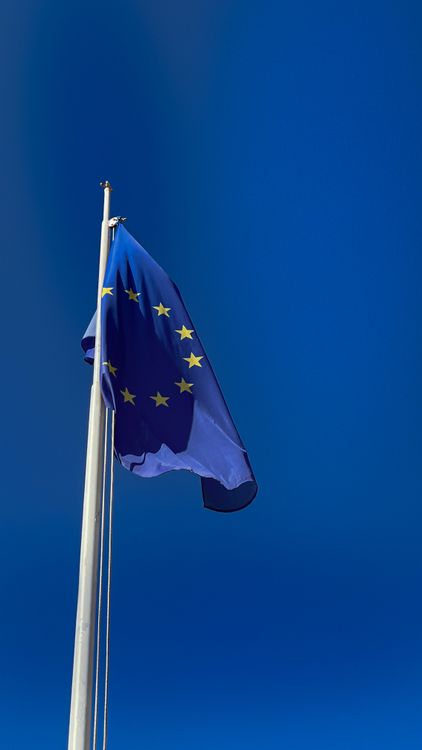
SAFE, short for Security Action for Europe, is the EU’s flagship defence loan programme. Announced earlier this year, it allows EU member states to borrow at low interest rates to buy military equipment together, rather than each country purchasing separately. It is part of the bloc’s broader ReArm Europe plan, also known as Readiness 2030, an €800 billion effort to rebuild European defence capabilities and be able to defend the continent from external threats by 2030.
The fund was created amid fears of a potential Russian attack on the EU and growing doubts among member states about the reliability of US military protection.
Canada is the only non-European country taking part. The EU concluded its agreement with Canada allowing it to participate under SAFE in February, and the arrangement was sealed when Defence Minister David McGuinty signed the deal at the Munich Security Conference. Canada’s formal participation was then confirmed at the Canada-EU summit in Montreal on October 29 and 30.
Under the programme, joint arms projects must have a minimum of 65 percent of their components produced within the EU’s 27 member nations, but partner countries such as Canada can be granted exemptions, according to reports.
Priority spending under SAFE covers missiles and ammunition, artillery systems, ground combat capabilities, drone and anti-drone systems, cyber warfare, air and missile defences, maritime forces, electronic warfare and the protection of space assets.
Carney’s pivot away from Washington
Carney has been explicit that the SAFE deal is about more than defence contracts. He has said he intends to diversify Canada’s procurement and trade partnerships and deepen the country’s relationship with the EU. He has previously said that more than 70 cents of every dollar of Canadian military capital spending would no longer go to the US.
That is a striking shift for a country whose military has been deeply integrated with the United States for generations through NORAD and NATO, and which has bought the overwhelming majority of its major weapons systems from American companies.
The SAFE announcement also lands in the same week as Carney’s second federal budget, presented on Thursday, November 5. The budget, which the government has titled “Masters of our Destiny,” is built around reducing Canada’s economic dependence on the US market, diversifying export partners and strengthening domestic industries — including defence, critical minerals and energy.
Carney has also agreed to spend the equivalent of five percent of GDP on defence by 2035, a huge increase from the two percent Canada was expected to reach in 2025, according to NATO estimates. Canada has confirmed it will meet NATO’s military spending guideline by early 2026.
What Canadian companies get out of it
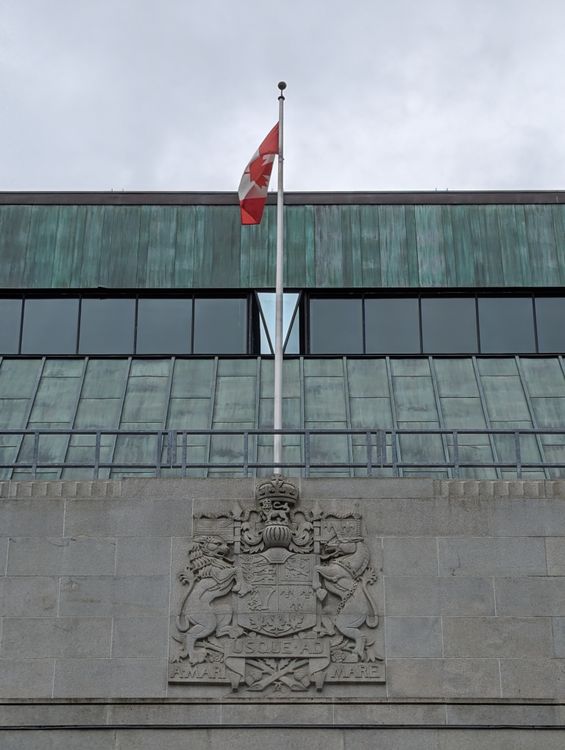
For Canadian defence firms, SAFE membership opens a door that was previously closed. Canadian companies can now partner with European peers to bid on joint projects and access favourable financing on the same terms as European firms, giving them what one industry analysis called “a better path into European procurement programmes.”
The benefits are already visible on the ground. At the Montreal summit, Carney pointed to Canadian workers at Marconi and Galvion who are manufacturing military equipment for allies in Poland and Latvia. The GoldenEye surveillance system, built as part of a partnership between Saab and Bombardier, supports 3,000 Canadian jobs. Europe already buys Canadian water bombers, and Canada has agreed to back a significant increase in water bomber production, with De Havilland due to open a second production line in Wheatland County, Alberta.
However, analysts caution that access alone does not guarantee contracts. “Access still has to translate into contract wins,” one defence industry expert noted, adding that the ultimate benefit will depend on the workshare Canadian firms actually receive in joint European projects.
A new alliance — and the UK left out
The Montreal summit produced more than the SAFE deal. Carney and von der Leyen launched what they called the “Alliance for the Future,” a new partnership of like-minded nations focused on AI, energy, critical minerals, quantum technology and collective sovereignty. In parallel, the two sides are working towards Canada becoming the EU’s first “associate member” — a new form of partnership short of full accession, made necessary by Canada’s geography.
Von der Leyen proposed the associate membership idea in September, and Carney welcomed it, describing his goal as a “unique alliance” rather than conventional EU membership. The term “associate member” does not currently exist in EU treaties or the bloc’s standard enlargement framework, according to the Centre for European Policy Studies, a Brussels-based think tank — but both sides have agreed to define its full substance, scale and scope in the coming months, with the aim of concluding negotiations by the time Carney attends European Council meetings in June 2027.
In March, Canada will host the College of the European Commissioners and the federal Cabinet to advance the work.
Notably absent from the SAFE programme is the United Kingdom. Talks between the EU and London on the UK joining the fund ended without agreement last week, with negotiations foundering over money — Europe demanded more for the UK’s participation than the government was willing to pay. The contrast with Canada, welcomed in as the first non-European participant, underlines how far Ottawa has moved towards Brussels while London remains on the outside.
What the US midterms change — and what they don’t
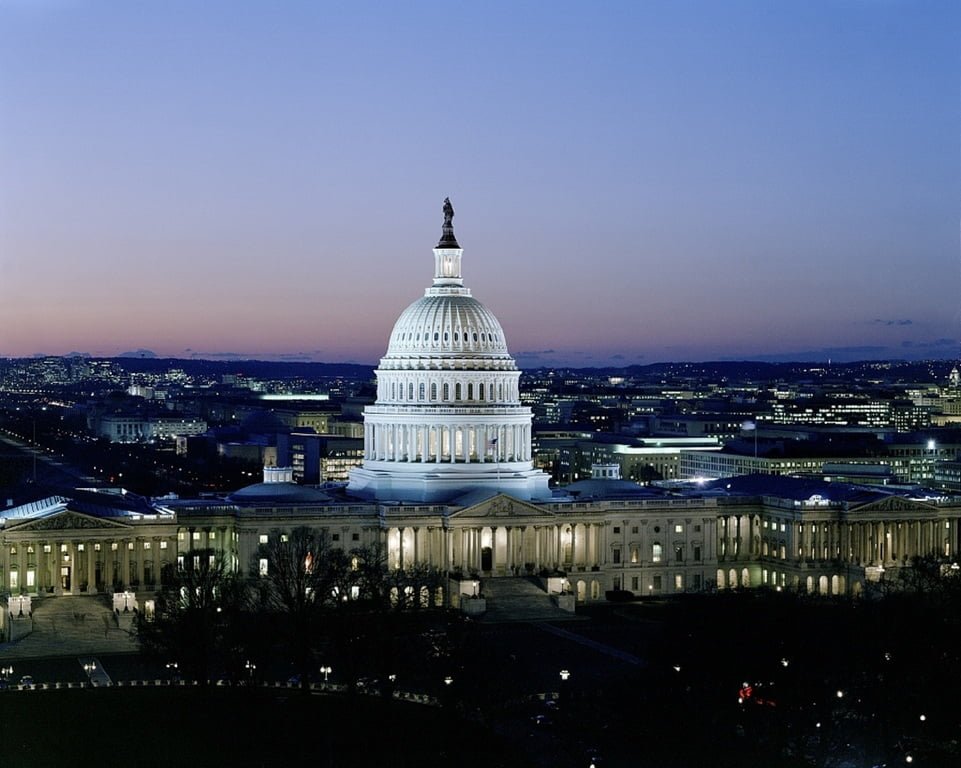
The SAFE announcement comes just two days after the US midterm elections, in which Democrats seized control of both the Senate and the House of Representatives, blaming rising costs on the war with Iran and Trump’s tariffs on major trading partners such as Canada.
Some in Ottawa hope the result will ease the trade war. Senior Democratic Representative Jamie Raskin told Canadian media that his party “will end these tariffs” and seek to repair relations “with our best friends like Canada.” Canada’s trade minister, Dominic LeBlanc, struck a more cautious note, saying the midterm results would not change Ottawa’s stance in trade talks and that negotiations would still be held with Trump’s White House, not Congress — trade policy falls to the US executive branch, and the new Congress will not take office until January.
LeBlanc said he planned to speak soon to US Commerce Secretary Howard Lutnick and Trade Representative Jamieson Greer. Trump said on Tuesday that the United States was close to making a trade deal with Canada, but Carney said work remained to be done and that Washington had dropped some demands.
For Carney, the message is that Canada cannot wait for American politics to change. Even if tariffs are eventually eased, his government argues the lesson of the past year is that Canada must never again be so dependent on a single partner — in trade, in energy or in defence. The SAFE deal, the new budget and the push towards EU associate membership are all parts of that same project.
What happens next
The test of the SAFE deal will come in the months ahead, as Canadian firms bid for their first joint European projects and Ottawa decides which capabilities to prioritise. The government has set a goal of steering most of its defence purchases to Canadian companies by 2035, under its Defence Industrial Strategy, and SAFE is meant to give those companies the scale and the export markets to get there.
Meanwhile, the political signal has already been sent. Canada, a country that has defined its security through its alliance with the United States for more than 70 years, is now building its military future with Europe. In a dangerous and divided world, as Carney put it, Ottawa has chosen to put its trust — and its money — in a new set of partners.
Whether that bet pays off in jobs, contracts and security will be judged over the coming years. But the direction of travel is now unmistakable: Canada is pivoting away from Washington, and Europe is welcoming it in.