

Tesla has finally put a price on its driverless car — and then charged extra to make it move. The Tesla Cybercab price is $29,990 before taxes, Tesla confirmed on Friday, November 13, 2026, when its Robotaxi account on X began inviting select customers to order the two-seat car for personal use. But the sticker price is only the start of the bill. The car will not operate without a $299-a-month Autonomy Subscription, a fee so steep that even Elon Musk, Tesla’s chief executive, publicly called it too high within a day.
The Cybercab has no steering wheel, no pedals and no driver controls of any kind. Until now it has only carried passengers as part of Tesla’s Robotaxi fleet. Now private buyers can own one — if Tesla invites them, if they live in the right city, and if they keep paying every month.
What Tesla is actually selling
Tesla announced the offer on Friday, November 13, through its Robotaxi account on X, posting screenshots of the order page and the invitation email. “Select customers are now being invited to purchase Cybercab for personal use,” the post said. The offer is invitation-only: Tesla has not said how many invitations went out or how recipients were chosen.
The order page lists $29,990 before taxes, a $1,000 non-refundable deposit, and estimated delivery in December 2026 in Austin, Texas. Each buyer is limited to one Cybercab.
The car is the gold two-seater Tesla unveiled in October 2024, with a 21-inch touchscreen and about 20.1 cubic feet of cargo space. When Musk first showed it, he promised a vehicle priced “below $30,000.” At $29,990, he has technically kept that promise — two years later, and with a monthly bill attached that he never mentioned on stage.
The $299 subscription: the real Tesla Cybercab price
The Tesla Cybercab price only makes sense when the subscription is added in, because the car is useless without it. The Autonomy Subscription Agreement, dated November 12, 2026, states plainly: “Your Cybercab will not operate without an active Autonomy Subscription.” If an owner cancels, the car cannot be used on public roads at all — there is no steering wheel to fall back on.
The numbers add up fast. At $299 a month, the subscription costs $3,588 a year — about 12 percent of the car’s sticker price, every single year. With the first month included, 59 paid months over five years add $17,641 to the purchase, putting the five-year cost at about $47,631, before taxes, insurance, registration, charging and maintenance.
What does the $299 buy? The subscription covers the autonomous driving software, connectivity, remote support and roadside assistance, including towing for about 50 miles. It does not cover auto insurance, registration, charging or parking.
There is another catch: the price is not locked in. The agreement names no dollar figure — the $299 appears only on the order page — and Tesla can change the fee with 30 days’ notice. For comparison, Tesla charges $99 a month for Full Self-Driving (Supervised) on its regular models — and if an owner drops that plan, they can still drive the car themselves. A Cybercab owner has no such fallback. The subscription is the car.
Musk says the fee is too high
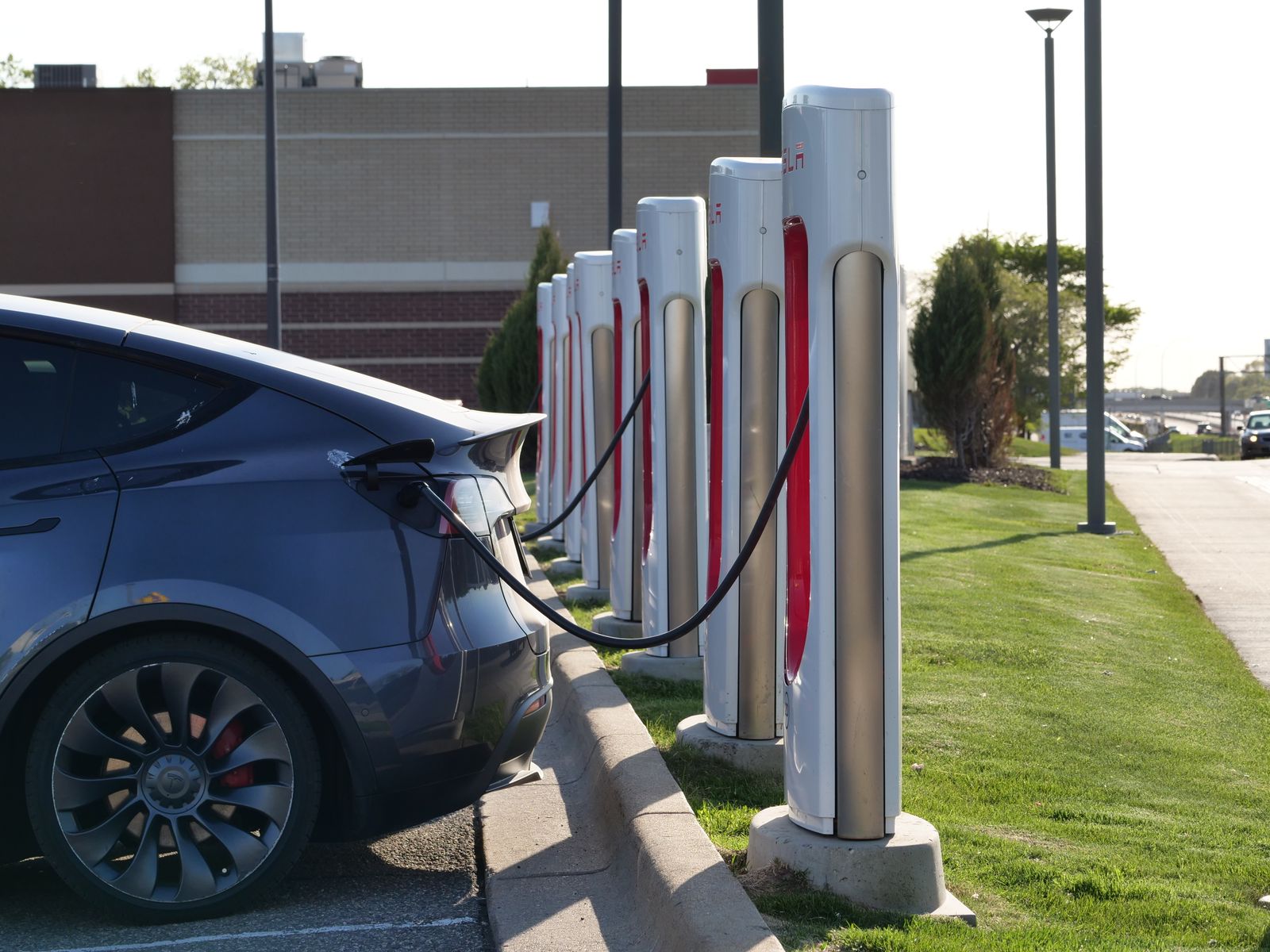
The most surprising reaction came from Musk himself. On Saturday, November 14, replying to YouTube reviewer Marques Brownlee, who had posted details of the invitation-only order page, Musk wrote, according to TechCrunch, that the monthly fee is “too high.” He added: “Should match the cost of Tesla [Full Self-Driving] and connectivity for other models, which is more like ~$115/month.”
At $115 a month, a year of service would cost about $1,380 instead of $3,588 — a saving of roughly $10,856 over five years. Musk also said the Cybercab “will be available nationwide, as we receive regulatory approval,” but he gave no timing for that expansion and did not say when, or whether, the $299 fee would change. As of publication, Tesla’s order page still lists the Autonomy Subscription at $299 a month.
Where you can (and cannot) drive it
Even a paid-up Cybercab owner cannot drive it just anywhere. The car only operates inside Tesla’s geofenced Robotaxi service areas, the mapped zones where its self-driving system is approved to run. Tesla runs that service in eight cities: Austin, Dallas, Houston, Fort Worth and San Antonio in Texas, and Miami, Orlando and Tampa in Florida. Outside those zones, the car does not operate.
The geofences are smaller than Tesla’s marketing suggests, according to Electrek, which reviewed the order details. Deliveries are currently limited to five Texas cities — Austin, Dallas, Houston, San Antonio and Fort Worth — with Austin named as the first delivery location in December. Tesla AI chief Ashok Elluswamy has suggested the second quarter of 2027 for privately owned Cybercabs to run unsupervised. A Model 3 can drive anywhere; a Cybercab can only go where Tesla’s map allows.
What you cannot do with your own Cybercab
The purchase terms also limit what owners can do with a car they have bought outright. Personal-use Cybercabs may not be used for commercial purposes without Tesla’s written authorisation. That rules out ride-hailing, delivery and rental work — and putting the car on Tesla’s own Robotaxi network to earn money, one of the original selling points in 2024.
The agreement also restricts resale: owners cannot sell the car without Tesla’s written consent, according to reports of the terms. And Tesla scores the driving it controls — three or more strikes for improper or unsafe use can suspend the car’s autonomous features for a week, during which the car may not operate at all, and the fee is not prorated. In effect, Tesla keeps control of the software, the map, the price and the permission to earn.
The regulatory question is still open
There is one more reason the Cybercab’s launch is tentative. Federal Motor Vehicle Safety Standards require traditional controls such as steering wheels and pedals, and the National Highway Traffic Safety Administration opened an audit query shortly after the Cybercab entered commercial service as a robotaxi. That review is still open — Tesla is selling the car before regulators have decided whether it can legally be on public roads.
Tesla has applied for exemptions before, and the Robotaxi fleet has operated in Austin since mid-2026. But a private sale puts a car with no manual controls into ordinary owners’ hands, with no driver to take over if the software fails. Regulators, insurers and lawmakers will all be watching the December deliveries closely.
How the Cybercab got here
Musk unveiled the Cybercab in October 2024, promising a sub-$30,000 autonomous taxi that owners could send out to earn money while they slept. Production was repeatedly delayed, and the car spent its first year as a fleet-only Robotaxi, with Austin rides priced below a Model Y — one trip was quoted at $7.77 against $12.10.
The personal-use offer is the next step, but it arrives in a different form from the one Musk described in 2024. The price is right, but the earning potential is gone, the operating area is small and the monthly fee is three times what Full Self-Driving costs. The dream of a car that pays for itself has become a car that costs $299 a month to keep moving. Bold promises often shrink on contact with the real world — just as SpaceX’s $74 billion AI campus plan still faces local votes before a single server is switched on.
Should you try to get an invite?
For most readers, the honest answer is that nothing is on sale yet. The offer is invitation-only, limited to one car per buyer, and restricted to a handful of Texas and Florida cities. Tesla has not announced a date when any buyer in the United States will be able to place the same order. Big tech launches often work this way, as we saw this week when Italy’s data regulator fined Meta 805 million euros.
If you do receive an invitation, the decision comes down to three questions. Do you live inside one of the eight Robotaxi service areas, and are you happy to stay inside it? Are you comfortable paying $299 a month indefinitely, knowing Tesla can raise the price with 30 days’ notice? And can you live with a car you cannot drive yourself, cannot use to earn money and cannot sell without Tesla’s permission?
The Tesla Cybercab price of $29,990 looks like a bargain — the cheapest Tesla ever, undercutting the Model 3 by about $7,000. The real price is the subscription, and at $47,631 over five years before taxes and insurance, it is not a bargain at all. Even Musk seems to agree.
What happens next
Three things will decide whether the Cybercab becomes a real product or a curiosity. The first is the December deliveries in Austin: whether buyers take delivery, and whether the cars work. The second is the subscription fee: whether Tesla cuts it toward Musk’s $115 figure, and when. The third is the regulators: whether NHTSA clears a car with no steering wheel for private ownership, and how quickly Tesla’s geofenced map grows beyond Texas and Florida.
Until then, the Cybercab is an experiment you can buy into — for $29,990, plus $299 a month, for as long as you want it to move.