
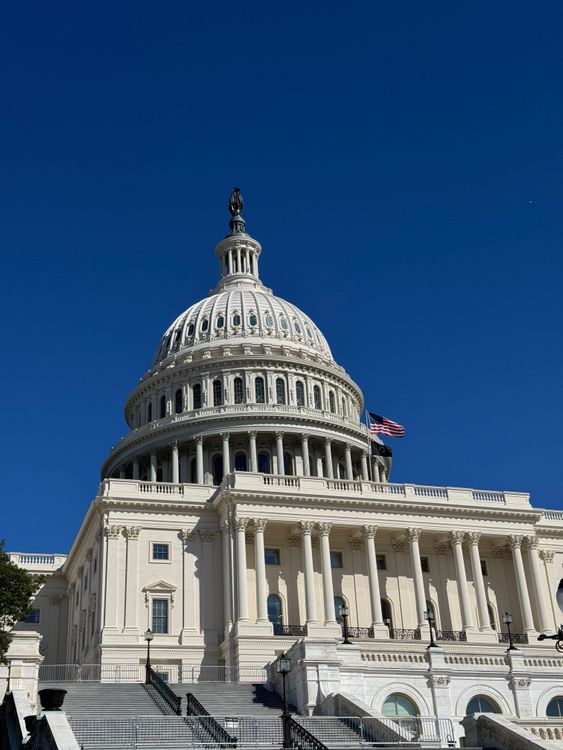
Hackers have breached the FBI’s National Crime Information Center, the nationwide database American police officers query every day to check warrants, track fugitives and run background checks. The FBI is investigating the intrusion, first reported on Friday, November 20, and confirmed by multiple outlets on Saturday. It is the second cyberattack on the bureau in as many months, and officials have not yet said who was behind it, how the attackers got in, or what information they may have reached.
President Donald Trump, asked about the breach in a Fox News interview on Saturday, said: “We just heard about it and I will say that it’s not good.” The FBI has declined to comment, and there was no sign on Saturday that the system had stopped working or that records had been altered. The NCIC is, in the words of one former FBI official, “America’s computer for law enforcement.”
What happened: the FBI NCIC database hacked
CNN first reported the intrusion on the evening of Friday, November 20, citing two people briefed on the investigation. The Associated Press confirmed it on Saturday through a person familiar with the matter who was not authorized to speak by name, and Fox News confirmed it through three sources of its own. Bureau officials learned of the intrusion earlier in the week, according to CNN, and the FBI has been investigating since. The FBI has not publicly confirmed the breach itself.
What is known so far is limited. Investigators are still working to determine the unauthorized entry point, and it is unclear what information was compromised, sources told Fox News. No group has claimed responsibility, and there is currently no indication that the incident is connected to the hacking group that targeted the FBI in September.

What is the NCIC database?
The National Crime Information Center is a computerized database of criminal justice information maintained by the FBI and available to local, state and federal law enforcement agencies across the United States. It was launched in 1967 and is run by the FBI’s Criminal Justice Information Services Division in Clarksburg, West Virginia.
The database holds records on fugitives, missing persons, criminal histories, stolen property, stolen vehicles, protection orders and sex offenders. The FBI reported more than 18 million active records across 22 files as of 2023, and millions of transactions a day for more than 100,000 partners. Roughly 56 state terminals feed the system to hundreds of thousands of patrol car computers, so an officer can check within seconds whether a driver has a warrant or a vehicle is reported stolen.
What the hackers may have reached, and what is still unknown
The most important questions about the breach remain unanswered. Investigators have not said how the attackers entered the system, which parts of the database were exposed, or whether the hackers managed to retrieve or alter any information. The FBI has not said whether any records were changed, deleted or copied, or whether the intrusion affected the system’s availability to law enforcement.
The database does not hold classified intelligence or sensitive FBI investigative case files. But it does store personally identifiable information, including names, dates of birth and Social Security numbers, according to former officials. If personal data was copied, the people named in those records could face identity theft and other harm.
Investigators will examine IP logs and metadata to determine whether the attackers used a stolen password, breached a state terminal, or came in through a third-party vendor.
Read also: How to Spot a Phishing Email in 2026
Why police officers are worried: the traffic-stop risk
The sharpest warning so far has come from Jason Pack, a retired FBI supervisory special agent who worked in cybercrime and public information. Speaking to Fox News Digital on Saturday, Pack warned that a cyber intrusion into the NCIC could endanger police officers during traffic stops if hackers altered records inside the database.
“What they worry about is if any of this data has changed, then it might affect officers’ safety on the side of the road,” Pack said, noting that there is no indication yet that any records were altered. An officer approaching a vehicle relies on the NCIC to say whether the person inside is wanted, whether they have a history of violence, and whether the vehicle is stolen. If that information is wrong, the officer is working from a false picture of the risk in front of them.
A former FBI official who led investigations into cybercriminal groups told CNN that the accuracy of the information in the system was among the biggest concerns. A hack that copies data is a privacy disaster; a hack that changes data corrupts the tool officers use to make split-second decisions. There is no evidence so far that records were changed.
Trump’s reaction: “not good” — and a pivot to the Russia probe
President Trump was asked about the breach in an interview with Fox News Channel’s Kayleigh McEnany on Saturday, November 21. “We just heard about it and I will say that it’s not good,” he said. It was a brief, direct response, and his first public comment on the intrusion.
Trump also seemed to downplay the breach in the same interview, using the incident to revisit his longstanding grievances with the FBI over its investigation into Russian interference in the 2016 election, according to CNN. The Times reported that Trump suggested the hack may expose information about the so-called “Russia Hoax,” the name he gives to the FBI’s investigation of Moscow’s involvement in the 2016 election. The president declined to share specific information on the intrusion itself.
The pivot was striking: the NCIC breach is a live incident affecting a lifeline for law enforcement, while the 2016 Russia investigation is a closed chapter Trump has returned to repeatedly.
Read also: Trump press conference
The second FBI breach in months: ShinyHunters and the September jobs-portal hack
The NCIC intrusion is the second reported cyberattack targeting the FBI in recent months. In September, the extortion group ShinyHunters breached an FBI jobs portal website and stole a large trove of personal data on current and former FBI employees and applicants, including psychiatric and medical data and details of bureau employees and their assignments, according to Reuters.
Two suspected members of the group have been arrested in connection with the September breach, FBI Director Kash Patel said on October 9. Canadian cybersecurity executive Edward Dubrovsky was arrested on October 8 and faces charges related to the intrusion.
There is currently no indication that the NCIC incident is connected to ShinyHunters or the earlier breach. But the pattern is hard to ignore: two intrusions in two months. The September breach was about people — the personal data of FBI staff. The November breach is about the information those people use to do their jobs.
NCIC vs NICS: what this means for gun background checks
One point of confusion in the first hours of reporting deserves clearing up. The reported breach is of the NCIC, not the NICS. The two systems are related but different, and the distinction matters for anyone wondering whether gun background checks are affected.
Both are run by the FBI’s Criminal Justice Information Services Division in Clarksburg, West Virginia. The NICS, or National Instant Criminal Background Check System, is what firearms dealers use to check whether a buyer is disqualified from purchasing a gun, and every check searches three sources: the NICS Index, the NCIC, and the Interstate Identification Index of criminal histories.
The reported target is the NCIC, the database that NICS queries, rather than the NICS transaction system itself. Federal rules require NICS to destroy an approved buyer’s identifying information within 24 hours, and the gun-related records that sit in the NCIC are denied transactions and stolen-gun serial numbers. There has been no report that background checks have stopped working, and no official has said the NICS system itself was breached.
What happens next
What happens next depends on the forensic work now under way. The FBI must determine how the attackers got in, what they touched, and whether anything was copied or changed. It must then decide what to tell the more than 100,000 law enforcement partners who use the system. Congress is likely to seek briefings, and the incoming Democratic majority will have new leverage to demand answers.
For the public, the questions are simpler: is the system working, is the information accurate, and was my personal data exposed? None has a public answer yet. Until the FBI provides one, the breach remains a serious, unresolved intrusion into the heart of American law enforcement.
(This is a developing story.)
Frequently asked questions
Was my personal information exposed in the FBI NCIC database hack?
It is not yet known. The NCIC stores names, dates of birth and Social Security numbers, but the FBI has not said what information, if any, was compromised.
Is the NCIC system still working for police?
There is no indication of an outage, but the FBI has not yet confirmed that all records in it are accurate.
Who hacked the FBI’s NCIC database?
No group has claimed responsibility, and officials have not named a suspect. There is no indication of a connection to the ShinyHunters group.
Will Congress investigate the FBI NCIC hack?
Congress oversees the FBI and is likely to seek briefings. The incoming Democratic majority takes control in January.