
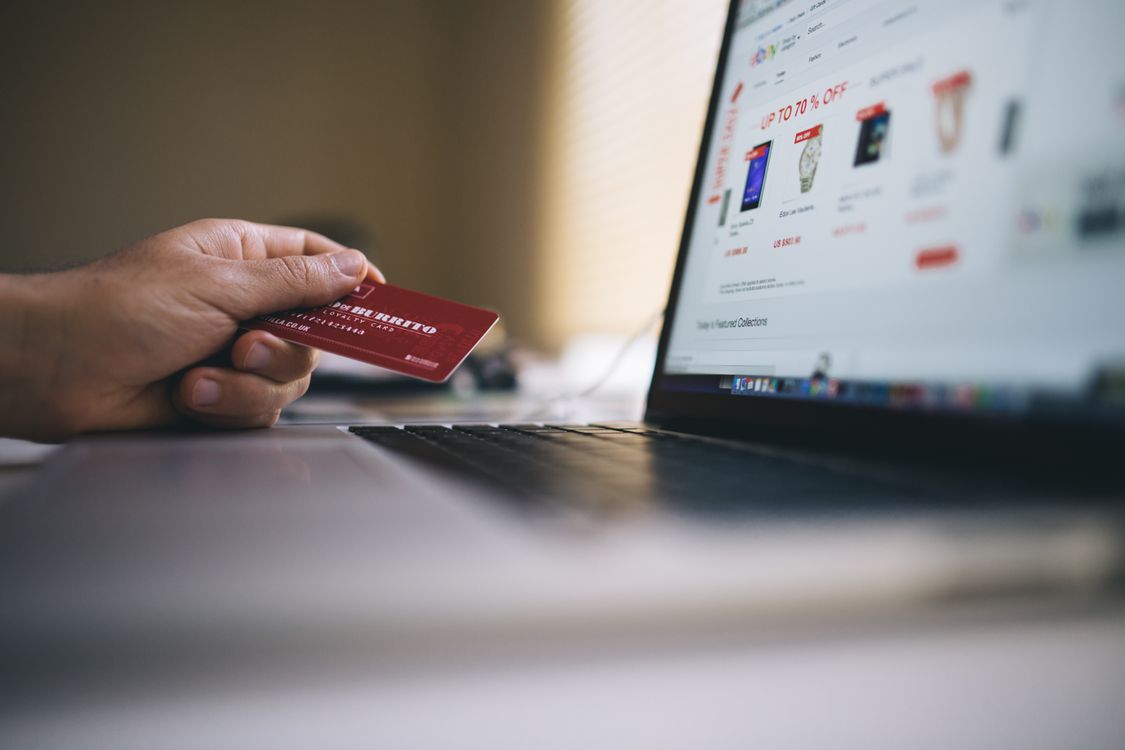
ChatGPT has spent two years helping people find things to buy. Now OpenAI wants it to finish the job. On Friday, November 13, 2026, the company launched ChatGPT Wallet, a payment feature that lets its always-on AI agents, called dots, complete purchases on your behalf — without ever seeing your real card number.
For now, only a limited group of American ChatGPT Pro subscribers can use it, and every purchase still needs your approval. But the direction is clear: the chatbot that helps you choose is about to become the assistant that pays, too. That raises questions no shopping feature has raised before — who is responsible when an order goes wrong, which shops will accept an agent at the checkout, and how much control you really keep.
What Is ChatGPT Wallet?
ChatGPT Wallet is a payment feature built into ChatGPT for use by dots, OpenAI’s always-on agents. Dots were introduced on September 29, 2026, as agents that run in their own cloud computer and browser, working on tasks in the background. Until now, a dot could research products, compare prices and fill a basket. It could not pay — Wallet closes that gap.
OpenAI describes it as the first wallet that lets agents pay without access to your actual card details, and that requires a security check for every purchase. It was built with American Express, Mastercard and Visa, and is rolling out gradually, starting in the United States.
The timing is no accident. OpenAI says 1.2 billion people use ChatGPT every week, and many already use it to research products and decide what to buy. Turning that research into completed purchases is the obvious next step. OpenAI says it is taking no cut of Wallet transactions at launch — it wants merchants and payment companies on board first.
How a Purchase Works
You add a card once, inside ChatGPT, and it stays there for future purchases. After that, each order follows four steps, and you are involved in every one.
First, you ask your dot to buy something — a birthday gift under a set budget, or a reorder of a household item. The dot searches, compares options and prepares the order. Second, the dot shows you a summary before anything is paid for: the items, the total and the card that will be charged. This is the moment to catch mistakes — the wrong size, the wrong colour, or a price that changed.
Third, you approve the purchase with a security check, such as Face ID or a fingerprint scan. Nothing is charged until you do this — at launch, the agent cannot complete a Wallet purchase without your review and biometric approval. Fourth, once you approve, the card network — not OpenAI and not the agent — supplies a single-use payment token: a substitute set of card details, valid only for that one transaction. The merchant charges the token, your real card number never leaves the card network, and the agent never sees it.

Who Can Use It — and Who Cannot Yet
The launch is deliberately narrow. ChatGPT Wallet is rolling out gradually to ChatGPT Pro subscribers in the United States who are 18 or older and hold an eligible card issued by a US financial institution, with a US billing address. Credit cards only are supported at launch: debit cards are not accepted, and virtual cards cannot be added yet.
It also only works in one place: inside conversations with your dot. It does not work in regular ChatGPT chats, in Work, or in standalone Codex threads. Dots are a Pro feature, so the wallet is not available on the Free, Go or Plus plans.
That leaves most ChatGPT users outside the launch, including everyone in the UK and Canada for now. OpenAI has not announced a date for wider availability, saying it wants to learn from real-world use during the limited rollout before expanding. If you are eligible, the rollout is still gradual, so the feature may not appear in your account straight away.
How Your Card Stays Safe
The safety of ChatGPT Wallet rests on three ideas. The first is tokenisation. Your real card details are never shown to the agent or the merchant. Each approved purchase generates a one-time token from the card network, and that token is all the merchant ever sees. Even if a shop’s systems are breached, the stolen token cannot be used for another purchase — the same technology that already protects tap-to-pay phone wallets.
The second is approval. Every purchase needs your review and a biometric check. The agent can prepare an order, but it cannot pay for it on its own — and that matters, because AI agents make mistakes: they can misread a price, pick the wrong variant or misunderstand a request.
The third is the fraud system around the wallet. OpenAI is working with fraud-prevention partners Forter, Riskified, Sardine and Signifyd, and with payment providers Adyen, Checkout.com and Stripe, to help their systems recognise legitimate agent purchases — because a purchase made by a bot looks, to a fraud filter, a lot like a purchase made by a fraudster.
What Happens If Something Goes Wrong?
This is the question that matters most, and the honest answer is that the rules are still being written. ChatGPT Wallet is only a few days old, there are no independent tests of how reliably dots complete checkouts, and nobody has yet tested in court who pays when an agent buys the wrong thing.
What is clear is where responsibility sits in the basic cases. Because the transaction is direct between you and the merchant, the merchant is responsible for the product, the price, the delivery and the return — exactly as with any other card purchase. If the item never arrives or arrives broken, your card’s dispute protections should apply in the usual way.
What is less clear is the middle ground: the agent buys the right product in the wrong size, or pays a higher price than the one you discussed. In those cases, the approval screen is your protection — you saw the items and the total before you confirmed with Face ID. So read the summary every time, check the total, and do not approve a purchase you have not actually looked at.
Why Some Shops Are Blocking AI Agents
ChatGPT Wallet only works if shops let AI agents through the door, and right now some of the biggest ones do not. Amazon prevents agents from buying products directly on its platform, and Amazon blocked Meta’s Muse agents earlier this year. United Airlines announced earlier in November that it blocks automated agents from booking tickets.
From a retailer’s point of view, an agent at the checkout is a problem: it does not browse the way a person does, and it is hard to tell apart from the bots that scrape prices, hoard stock or commit fraud. Some sites block agent purchases deliberately. Others, OpenAI says, do it unintentionally — their bot defences simply treat any automated checkout as suspicious.
OpenAI’s Commerce Partner Playbook is its answer: to accept payment from ChatGPT Wallet, websites need to make sure agents are not inadvertently blocked, and payment systems need to recognise legitimate agent purchases. Whether retailers listen will decide how useful Wallet becomes. A wallet that only works at a handful of friendly shops is a demo, not a payment method.
What Happens Next
For now, ChatGPT Wallet is a limited first step: a small group of American Pro subscribers, only through dots, only with credit cards, and only with your approval on every purchase. It will not reach the UK or Canada any time soon, and many big shops will not accept it at all.
What happens next depends on three things: whether dots can complete checkouts reliably across many different shops without errors or blocked sessions; whether retailers cooperate, by letting agents through and teaching their fraud systems to recognise them; and whether users trust it — whether the convenience outweighs the unease of letting software spend your money.
There is also a longer game. OpenAI says that over time, users may be able to delegate purchases entirely to their agent by setting spending limits, purchase categories or time periods. That turns Wallet from a checkout button into an agent with a budget. The company is not offering that yet — but the motive is clear: if ChatGPT becomes the place where people research and buy, OpenAI sits at the centre of a huge flow of shopping, valuable even before a single fee is charged.
For readers in the US who are eligible, the sensible approach is to try it on something small and low-risk first — a reorder of something you buy regularly, where you already know the price and the seller. Read the approval screen carefully and check the total before you trust it with anything bigger. For everyone else, the launch is still worth watching: the first wallet that lets an AI agent pay is a milestone, even if you cannot use it yet. The question now is not whether AI agents will buy things for us — that has already happened. It is how quickly the shops, the banks and the rest of us catch up.
Read next: Claude Meetings puts Anthropic’s AI inside your Google Meet calls, and Gemini 4 Hydrogen is Google’s fast, affordable AI model.