
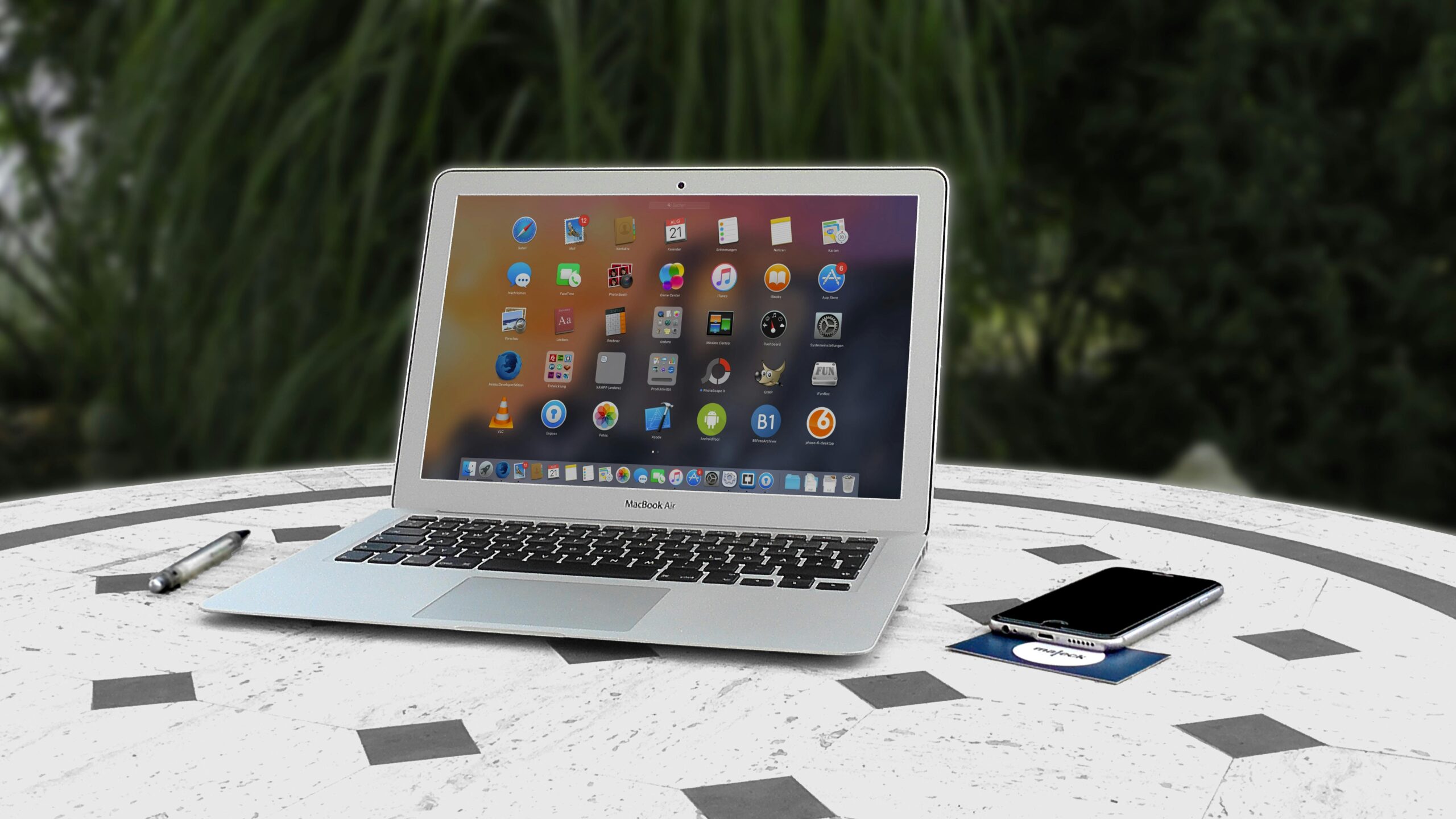
Apple’s quietest launch of the year may also be its smartest buy. The 14-inch MacBook Pro with M6 — the first laptop running Apple’s new 2nm M6 chip — hit stores today, Friday, November 6, 2026, priced from $1,999. While the touchscreen PROLED MacBook Pro grabbed the headlines this week, the M6 model is the one most people should actually buy: independent battery tests record up to 19 hours of web browsing on a single charge, and the new chip is up to 30 percent faster at graphics than the M5 it replaces.
Apple announced the M6 MacBook Pro on October 27, opened pre-orders on October 28, and put the machine on sale today alongside the OLED iPad mini and the M6 iMac. It is the only new MacBook Pro that keeps the familiar mini-LED screen and the familiar $1,999 starting price. There is no OLED panel here and no touchscreen — those belong to the PROLED models that start at $2,899. What the M6 model offers instead is the newest chip Apple makes, the longest battery life ever claimed for a Mac, and a price $900 lower than its touchscreen sibling.

In stores today: price and configurations
The base 14-inch M6 MacBook Pro costs $1,999, or $38.99 per month for 12 months, and $1,899 with education pricing. In the UK it starts at £1,999. That buys the M6 chip with a 12-core CPU and 12-core GPU, 16GB of unified memory and a 1TB SSD. It is the same $1,999 starting price as the M5 model it replaces, and the same price the M5’s 1TB configuration was raised to before it was discontinued.
Memory tops out at 32GB — Apple will not let you configure more — and that ceiling matters for heavy users. The 16GB base model keeps the same 153GB/s memory bandwidth as the M5, while the 24GB and 32GB configurations get faster 170GB/s bandwidth. A nano-texture display option, which cuts glare for anyone working near a window, adds $150. The laptop comes in space black and silver, and standard configurations are available for immediate in-store pickup or home delivery from today.
The M6 chip: Apple’s first 2nm laptop processor
The chip is the whole story of this laptop. The M6 is Apple’s first processor built on a 2-nanometer process, and it debuted in the Mac mini back in August before arriving in a laptop today. It is also the first Apple laptop chip with two Neural Engines instead of one, which is where most of its gains land.
The M6 has a 12-core CPU — two super cores, four performance cores and six efficiency cores — and a 12-core GPU, two more cores apiece than the base M5. Every GPU core has its own Neural Accelerator, and the dual 16-core Neural Engine is rated up to 1.9 times faster than the single engine in the M5. Apple claims up to 30 percent faster graphics and up to 25 percent faster on-device AI than the M5, and its own app tests put the M6 up to 1.2 times faster in Affinity and up to 1.3 times faster in Blender ray tracing, Xcode builds and local language-model processing.
Battery life: the 19-hour question
Battery life is the M6 MacBook Pro’s headline feature, and for once the independent tests back up the marketing. Apple rates the machine at up to 24 hours of video streaming, which it calls the longest battery life ever in a Mac, and says it runs at the same speed unplugged as it does on the charger. The first reviewer battery tests, published alongside today’s store launch, record continuous web surfing of between 17 and 19 hours on a single charge over Wi-Fi at moderate brightness, with several outlets landing right near the 19-hour mark before shutdown.
That puts the M6 14-inch among the longest-lasting professional notebooks ever tested, comfortably ahead of comparable Windows ultraportables. Apple says the machine gives Intel-based upgraders up to 14 additional hours and M1 owners up to four more hours. The battery itself is a 72.4Wh unit, only slightly larger than the 70Wh cell in the M3 model, so the endurance comes from the 2nm chip’s efficiency rather than a bigger battery. Fast charging is included too: with a higher-wattage USB-C adapter such as Apple’s 96W model, the battery reaches 50 percent in roughly 30 minutes.
Two cautions are worth keeping in mind. Apple’s 24-hour figure is for light video streaming, and the 17 to 19 hours reviewers measured is for web browsing — heavy creative work will drain the battery much faster. And the M5 MacBook Pro was already rated at up to 24 hours, so the M6’s real gain is in measured endurance rather than the headline number. Even so, a laptop that genuinely survives a full working day and then some, without hunting for a charger, is a real upgrade for travellers and students.
Same design, same screen — no OLED, no touch
Everything outside the chip is familiar, and buyers should know exactly what they are — and are not — getting. The chassis is unchanged from recent years, the display is the same 14.2-inch Liquid Retina XDR mini-LED panel that peaks at 1,600 nits for HDR, and there is no OLED screen and no touchscreen on this model. Those features belong to the MacBook Pro with PROLED XDR Display, which starts at $2,899 and which we reviewed separately. If the OLED panel and touch input matter to you, read our MacBook Pro PROLED XDR review before deciding — but expect to pay $900 more for them.
What you do get is the full Pro port selection: three Thunderbolt ports, an HDMI port, an SDXC card slot, a headphone jack and MagSafe 3 charging. Wireless is handled by Apple’s N1 chip, bringing Wi-Fi 7 and Bluetooth 6 to the standard 14-inch model for the first time. The machine runs macOS 27.2, and the Siri AI assistant arrives as a beta.

For photographers and video editors, one honest note: on GPU cores, memory bandwidth and maximum memory, the base M6 sits below the M5 Pro and M5 Max, which the higher-tier MacBook Pros still use because there is no M6 Pro or M6 Max yet. If your work is heavy photo or video editing, the M6 is capable, but it is the entry-level Pro, not the flagship.
What the first benchmarks show
The first benchmark numbers confirm the story Apple told at launch. Geekbench 6.7 runs on the M6 chip record 4,708 single-core and 21,405 multi-core, against 3,613 and 17,505 for the MacBook Pro with M5. In Handbrake, the M6 finished a test encode in 2 minutes 45 seconds, against 3 minutes 31 seconds for the M5 machine. Those are meaningful gains, driven by the two extra CPU cores and the 2nm process, and they line up with Apple’s claim of up to 30 percent faster graphics.
Reviewers generally agree on who this laptop is for. It is a compelling purchase for users upgrading from older M1 or Intel-based Macs, where the performance jumps exceed ten times in graphics and AI workloads. Owners of recent M4 or M5 laptops will find fewer reasons to upgrade, unless maximum battery endurance or Wi-Fi 7 are essential. That is the honest shape of this launch: a big leap for anyone on a four- or five-year-old machine, and a modest one for anyone who bought in the last two years.
M6 vs M5 vs PROLED: which MacBook Pro should you buy?
The 2026 MacBook Pro lineup is now three machines, and the choice between them is clearer than it looks. The M6 14-inch starts at $1,999 with the newest chip, the best measured battery life and the standard mini-LED display. The 14-inch PROLED model starts at $2,899 with the older M5 Pro chip but a far better tandem OLED touchscreen, a lighter body and the glowing Apple logo. The 16-inch PROLED starts at $3,399.
Buy the M6 if you want the best value in the lineup: the newest processor, up to 19 hours of tested battery life, and $900 left in your pocket. Buy the PROLED model if you work with photos, video or HDR content all day and the display is your tool. And if you already own a recent M5 MacBook Pro, buy neither: there is no performance reason to upgrade this year, and the smart move is to wait for the M6 Pro and M6 Max models that will presumably follow.
For more on getting the most from the laptop you already own, see our guide on how to speed up your laptop in 2026, and if you are weighing Apple’s cheaper options, read our MacBook Neo vs MacBook Air M5 comparison before you decide.
What happens next
The M6 MacBook Pro is the start of Apple’s 2nm era, not the end of it. The chip debuted in the Mac mini in August, reached the laptop and the iMac today, and the obvious next step is M6 Pro and M6 Max versions for the higher-tier MacBook Pros — and, further out, a PROLED display paired with an M6-class chip, which would combine this machine’s battery life with the touchscreen model’s screen.
Watch for three things in the coming weeks: full battery rundowns under creative workloads; independent Geekbench results from the laptop itself rather than the Mac mini; and whether Apple brings the M6 to the MacBook Air, which would make 2nm efficiency available at a much lower price. Until then, the M6 MacBook Pro is the sensible MacBook Pro: not the flashiest launch of the week, but the one most buyers should choose.