
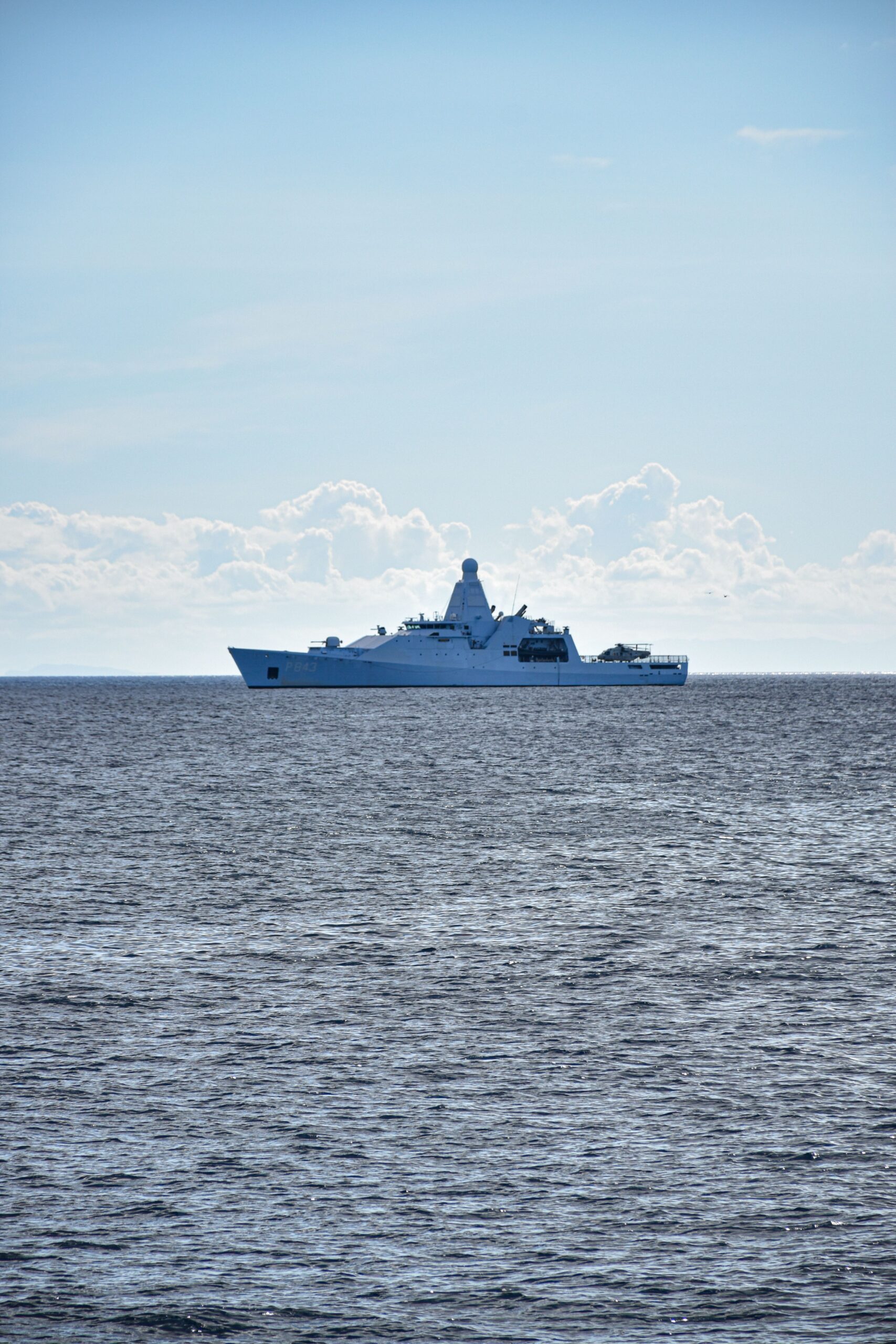

Ukraine has sunk a Russian warship more than 1,500 miles from its own shores. President Volodymyr Zelenskyy confirmed on Monday that Ukrainian sea drones struck the Russian corvette Merkury at the port of Benghazi in Libya, in an operation he called “exemplary” — the latest sign that a war which began in eastern Ukraine is now being fought across the Mediterranean Sea.
The attack, carried out before dawn on Sunday, November 22, targeted two Russian vessels near the eastern Libyan city. Seven Ukrainian-made naval drones were launched, Zelenskyy said, and both targets were hit. The Merkury, one of the newest ships in the Russian navy, was sunk at its berth, and a Ka-27 military helicopter on board was destroyed with it. The dry cargo ship MV Angara, which Kyiv says Moscow used to transport weapons, was also struck.
Satellite images from the company Vantor showed the Merkury capsized and largely submerged, with only its bow still above the water and smoke rising from the wreck. Libyan officials, however, have described the vessel as severely damaged rather than sunk. At least 10 people, including Libyan and Russian nationals, were wounded, and Benghazi residents reported loud explosions and flames at the naval base in the early hours of Sunday.
Ukraine Drones Sink Russian Warship at Benghazi

The operation began in darkness. According to Ukraine’s Security Service, the SBU, seven uncrewed surface vessels — Sea Baby sea drones of the type Ukraine has used to such effect in the Black Sea — were transported to the area and launched from a so-called “mothership” in the Mediterranean, then sped toward the Benghazi Naval Base under fire from helicopters and automatic weapons mounted on motorboats.
Not all of them got through. Libyan military officials said at least four drones were intercepted and destroyed, but two struck the Merkury, and the explosions set off ammunition stored on board, according to the maritime security firm Ambrey.
The second target was the MV Angara. Zelenskyy said the cargo ship was used by Russia to transport military equipment, and the SBU called both vessels legitimate military targets because they directly supported Russian military capabilities. The Angara was hit and set ablaze, although it did not sink.
Hours later, a sea drone strike hit a Maltese-flagged commercial vessel sailing off Benghazi, the Libyan coast guard said. Its crew was rescued, and Libyan forces intercepted more than 20 drone boats off the city on Sunday evening, military sources told Reuters.
The SBU says the drones were launched from a mother ship at sea; Libyan officials say they were launched from a base run by Ukrainian forces in western Libya.
The ships: the Merkury and the MV Angara
The Merkury was no ordinary target. The 344-foot, 1,800-ton vessel is a Project 20380 Steregushchiy-class corvette, one of the newest ships in the Russian fleet, commissioned only in 2023, a year after Moscow launched its full-scale invasion of Ukraine. It formally belongs to Russia’s Black Sea Fleet, which has already lost more than 20 vessels since the war began, according to the Wall Street Journal.
The corvette had been in Benghazi for several days, stopping to refuel and take on supplies under a maritime cooperation agreement between Russia and the eastern-based Libyan government, and was on its way back to Russia when the drones struck. It was escorting the Angara, a sanctioned dry cargo vessel that Ukrainian officials say was part of the logistics routes Moscow uses to move military equipment by sea.
How Ukraine struck 1,500 miles from home
The distance is what makes this attack remarkable. Benghazi lies roughly 2,400 kilometres — about 1,500 miles — from the front lines, the farthest Ukraine has ever projected naval power, and it was possible only because Kyiv has quietly built a presence in North Africa.

Ukrainian forces have been operating in western Libya under a covert arrangement endorsed by Western governments, according to Libyan officials, using the country as a base to strike Russian assets in the Mediterranean. Ukrainian drone specialists have worked from facilities in the west, including an air base in the coastal city of Misrata. In March, they used Libyan territory to strike a Russian tanker in the Mediterranean.
That arrangement is possible because Libya itself is divided between the internationally recognised government in Tripoli, in the west, and the rival administration in the east, centred on Benghazi and backed by General Khalifa Haftar’s Libyan National Army. Haftar’s forces control eastern and southern Libya and maintain close ties with Moscow. Russia’s warships dock in Benghazi; Ukraine’s operators work out of the west. Libya has become a proxy theatre of the Russia-Ukraine war, as Emadeddin Badi, a Libya specialist at Chatham House, put it.
Why Libya matters to Russia
Russia’s presence in Libya has grown sharply since it lost its sanctuary in Syria, when President Bashar al-Assad fell in December 2024 and Moscow lost the naval and air bases that had anchored its Mediterranean operations for a decade. Many of its military assets were moved to eastern Libya, where Haftar’s government offered port access and a friendly shore.
Russian warships and cargo vessels regularly stop in eastern Libyan ports to refuel and resupply, and each stop is a moment of vulnerability: a ship sitting still at a dock with limited defences. Benghazi applies the same template Ukraine’s sea drones used in the Black Sea — now 1,500 miles further away.
The reaction in Libya and at the UN
The reaction in Libya has been furious. The eastern-based government condemned the attack and said it had launched a joint investigation with Russia to uncover the circumstances, the source and the party behind it. Prime Minister Osama Hamad said his government had submitted a formal request to the United Nations General Assembly and Security Council to investigate the attacks, and warned that Libya “maintains its right to respond by all means necessary to ensure its sovereignty.”
The United Nations mission in Libya expressed “serious concern” and called for “an immediate, independent and transparent investigation.” Moscow has not publicly commented on the attack in detail.
What it means for the war and the peace push
It comes as President Donald Trump is pushing for a peace deal, just days after Zelenskyy met Trump at Mar-a-Lago to discuss a US-backed peace plan, security guarantees and the future of the Donbas. The Benghazi strike is a reminder that the war itself has not paused for the negotiations.
Ukraine’s message is clear: even while it negotiates, it can still hit Russia far from the front. The message is blunt — Ukraine drones sink Russian warship wherever Moscow sends one, even 1,500 miles from home. For the Trump administration the attack is awkward — the president has pressed both sides to stop fighting — but it strengthens Kyiv’s hand, because Ukraine is a combatant still capable of imposing costs on Russia, not a supplicant begging for a deal.
What happens next
Several questions will shape what follows. The first is whether the United Nations investigation requested by Libya’s eastern government goes ahead, and what it finds about the drones’ launch point. If it confirms Ukrainian forces operated from western Libya, it could deepen the rift between Libya’s rival governments.
The second is how Russia responds — a retaliatory strike, a diplomatic protest, or quiet absorption of the loss, as before. The attack took place on the territory of a friendly government, which may push Moscow to demand greater security for its vessels in Libyan ports.
The third is whether Ukraine tries again: the SBU has shown it can reach Benghazi, and Russian vessels calling at Libyan ports must now assume they are targets. The Benghazi strike will not stop the diplomacy, but it will shape it: Ukraine goes into the next round of talks having just sunk a Russian warship 1,500 miles from home, a fact no negotiator on either side will be able to ignore.
Frequently asked questions
Did Ukraine drones sink Russian warship in Libya?
Yes, according to President Volodymyr Zelenskyy, who confirmed on Monday, November 23, that Ukrainian sea drones sank the Russian corvette Merkury at the Benghazi Naval Base on Sunday, November 22. Satellite images show it capsized and mostly submerged, although Libyan officials describe it as severely damaged.
What is the Russian warship Merkury?
The Merkury is a Project 20380 Steregushchiy-class corvette of the Russian navy, 344 feet long and displacing about 1,800 tons. Commissioned in 2023, it belongs to the Black Sea Fleet and was docked in Benghazi to refuel and resupply under an agreement with Libya’s eastern government.
How far is Benghazi from the war in Ukraine?
About 2,400 kilometres, or roughly 1,500 miles, from the front lines. The SBU says the drones were launched from a mother ship in the Mediterranean; Libyan officials say they were launched from a base run by Ukrainian forces in western Libya.
What was the MV Angara, the second ship hit?
The MV Angara is a sanctioned Russian dry cargo vessel that Ukraine says Moscow used to transport military equipment. It was struck by a Ukrainian sea drone in the same operation and set ablaze. A Maltese-flagged commercial vessel was also hit off Benghazi hours later.
Related: Russian Missile in Poland: Tusk Calls It an ‘Intentional Provocation’ as NATO Scrambles Jets
Sources: CNN report on the attack | AP report on Zelenskyy’s confirmation