

WASHINGTON — President Donald Trump returned from Asia on Friday and walked into the White House briefing room for a 90-minute press conference that ranged from a new threat to tax American companies that build data centers abroad, to a defence of calling Vladimir Putin a friend, to a veto warning for the Democrats who take control of Congress in January.
It was Trump’s first major speech aimed at a domestic audience since his Republican Party was swept out of both houses of Congress in the midterm elections earlier this month. Flanked by Vice President JD Vance and Secretary of State Marco Rubio, with newly installed Chief of Staff Stephen Miller nearby, Trump praised his four-day trip to China and the Philippines and boasted about trade deals — and repeatedly wandered from the subjects he had come to discuss, at one point musing about the speed of his new Qatari-built Air Force One.
The data center tax threat
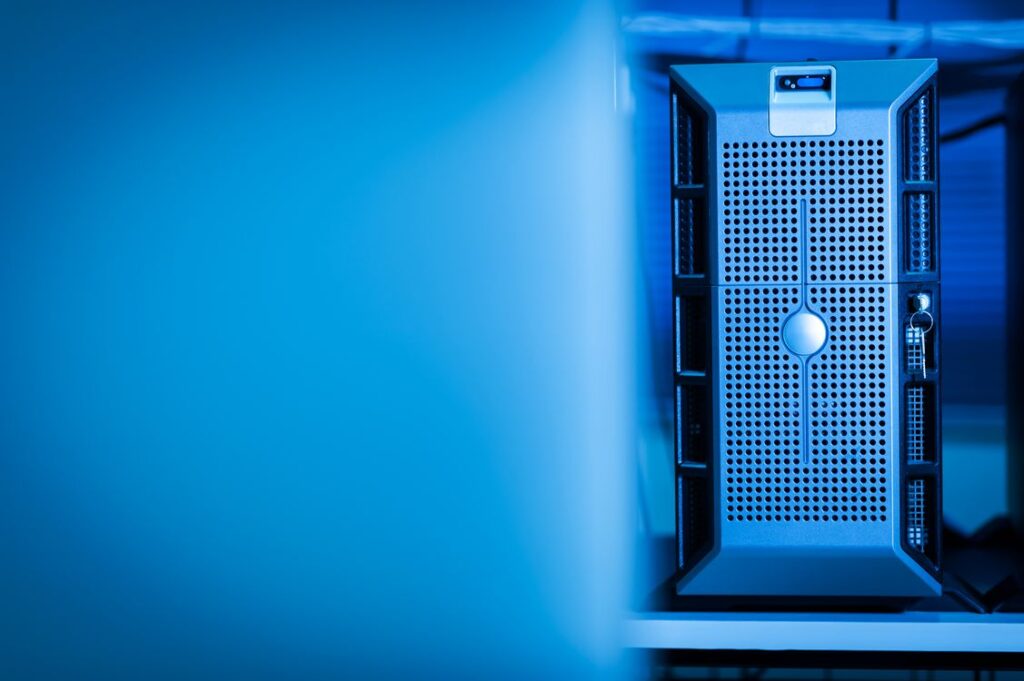
The sharpest new policy line of the afternoon came on artificial intelligence. Trump said the federal government would penalize American companies that build data centers in other countries, arguing that the huge, power-hungry buildings that train and run AI systems must stay in the United States if America is to stay ahead of China.
“We’re not going to allow our companies to build data centers outside of our country,” Trump told reporters. “If they do that, they can, but we’re going to put a tremendous tax on them.”
“We’re not allowing data centers to go into other countries because China will take all of them, and we’re not allowing that to happen,” he added. “And we’re going to put tremendous penalties on companies that try and do it.”
Trump singled out Google, saying the company wants to build a data center in Finland rather than directing all of that spending to the United States. He also said he had not yet discussed the policy with his own staff and provided no details on how the tax or any other penalty would work. That matters, because a president cannot impose a tax on his own: any such levy would be up to Congress, and it is unclear what penalty Trump could unilaterally place on a company for building abroad.
The threat lands in the middle of a genuine rush overseas. Many leading tech companies, including Amazon, Google, Microsoft and OpenAI, are pledging billions of dollars to develop data centers abroad, seeking cheaper land, labour and electricity.
Trump’s argument was that the overseas buildout hands an advantage to Beijing. “They allowed that to happen with chips and everything else, and it was very destructive to our country,” he said. “We want them to build it here. And if they won’t go in Texas or if they won’t go in California, they’re going to go in West Virginia.”
At the same time, he urged American communities to welcome the facilities rather than fight them, despite local opposition over electricity demand and utility bills. “You ought to take advantage of the data centers. … They’re tremendous assets,” he said. “Make the deal. They have plenty of money. Take it.”

“I get along with Russia”: the Putin defence
Large parts of the 90 minutes were spent praising Xi and Putin, despite concerns inside his own administration that both countries are working against American interests.
“We have a very great relationship,” Trump said. “Some of them in this room say, ‘Oh, it’s terrible he gets along.’ I get along with Russia. I get along with China. I get along with a lot of people.”
He defended, repeatedly, his description of Putin as “a friend” — a phrase that raised eyebrows in China days ago and which he did not back away from in the briefing room on Friday. But when CNN’s Kaitlan Collins pressed him on whether Putin is a friend to the United States as a whole, he was less sure. “I can’t speak to America,” Trump said.
Trump also repeated his assertion that Putin is ready for a deal to end the war in Ukraine, saying the Russian leader “clearly expressed his desire to see the war between Russia and Ukraine end by diplomatic means” in their bilateral meeting in Shenzhen. He blamed the “tremendous hatred” between Putin and Ukrainian President Volodymyr Zelensky, and suggested Russia’s invasion should have “lasted one day” — a remark likely to give Kyiv little assurance about his ongoing support.
That framing sits uneasily with the week that has just passed. Hours before the Shenzhen summit, Russia launched one of the largest missile and drone attacks of the war against Kyiv, and on Friday morning a Russian missile came down in Poland, a NATO member — developments covered in our earlier reporting on the Russia strikes on Kyiv and the missile in Poland.
Veto power and an offer to Democrats
Democrats will hold significant majorities in the House and the Senate starting in January, and Trump made clear that he sees his veto as the tool that will force them to deal with him.
“They’re going to send things my way, and I’m going to veto them. And then they’re going to send more things, and I’m going to veto them,” Trump said. “And they could go two years and one month, because that’s what we have, and I’m going to veto them.”
But he presented the veto as a starting point for negotiation rather than simply a blockade. “Because of the power of the veto, there’s a real possibility that we get a lot of great things done,” he said.
Healthcare was the area he named most clearly. “I’m open to great healthcare,” Trump said. “Now, can it be what they want? No, but it can be a combination of what we all want — and we could end up with great healthcare in our country.”
On immigration, he struck a softer note than usual, saying Democrats would see him deal first with “very hard-working people that came in, in some cases years ago” and asking, “What are we gonna do?”
He spoke warmly, too, about the two New York Democrats set to lead the new Congress — Senator Chuck Schumer and Representative Hakeem Jeffries — calling both men “smart” and saying he was willing to work with them. Whether that tone survives the first veto fight is another question.
Nvidia, Jensen Huang and the chip scandal
Trump also returned to the week’s big technology scandal: the fall of Nvidia chief executive Jensen Huang, who stepped down after admitting to an affair with a woman alleged to be a Chinese spy, amid disclosures that advanced Nvidia chips had ended up in China despite laws barring their sale there.
“I would love to see Jensen make a big apology and go back,” Trump said. “He put us in a position where we are literally 10 years advanced over other companies.” He added that Nvidia’s board should reinstate Huang “if they were smart” — even though the board has explicitly signalled it has no plans to do so. Trump said the question had come up in his meeting with Xi in Shenzhen, where he said Xi likewise described Huang as brilliant.
He also defended Commerce Secretary Howard Lutnick, despite reports that Lutnick delayed new export restrictions on Nvidia’s advanced AI chips. “I have not lost confidence,” Trump said.
On the substance, Trump insisted the United States remains far ahead. “You know, China makes great chips too, but we are actually 10 years ahead of China in chipmaking,” he said. Chinese companies have continued to access advanced chips by renting computing capacity at data centers in countries that can legally import them — the same overseas capacity Trump now wants to tax.
What the markets made of it
Wall Street was not reassured. Stocks resumed their decline after Trump spoke on Friday, and the Nasdaq Composite wiped out its gains for 2026, heading for its worst week since the “liberation day” tariff sell-off. Trump repeated his longstanding complaint about the Federal Reserve: “Interest rates are too high.”
What happens next
Three things will show quickly whether Friday’s briefing was the start of a policy shift or a 90-minute performance that fades by Monday. First, the data center tax: if the White House follows up with a proposal or a draft bill, companies with overseas projects will have something concrete to react to.
Second, the veto. The new Democratic Congress takes its seats in January, and the first bills it sends to the president will test whether his offer of deal-making on healthcare and immigration is real.
Third, Nvidia. The company’s board has made clear it does not plan to bring Huang back, and no president can order a private company to rehire its chief executive. But Trump’s public pressure keeps the scandal at the centre of Washington’s technology debate.
For now, the briefing stands as a snapshot of a presidency at a turning point: a president who lost Congress, leaning on the veto and on personal relationships with Xi and Putin, and willing to threaten American companies with a tax he has not yet explained how he would impose.
This is a developing story. We will update this post as the White House and Congress respond.