
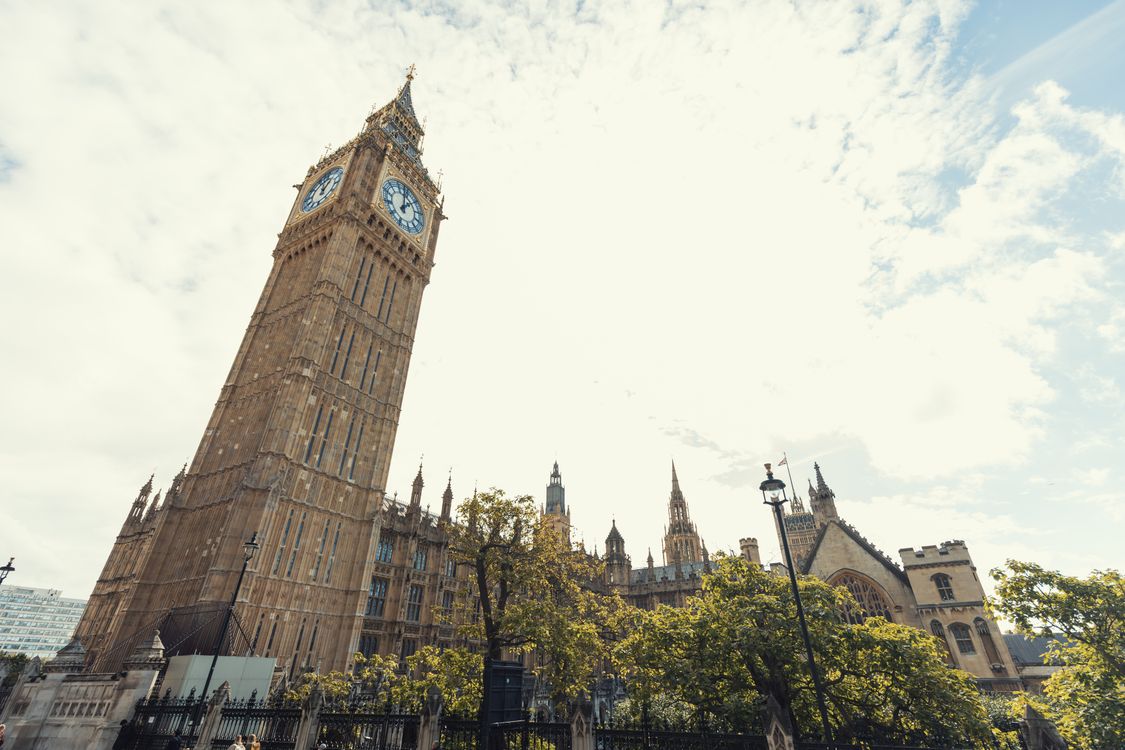
LONDON — A British prime minister has said out loud what his predecessors spent a decade avoiding. Speaking at the Lord Mayor’s Banquet in London on Monday, Andy Burnham declared that Brexit has not delivered what voters were promised, that Britain has “lost more than we have gained” since the referendum, and that the country needs a much closer relationship with the European Union.
“The Brexit we were given has not worked. We have lost more than we gained,” Burnham told the audience at the Guildhall in the City of London. On Friday, November 20, he will travel to Brussels for a UK-EU summit where he hopes to sign practical deals on food trade, energy and youth mobility.
Source: Associated Press
What Burnham said at the Lord Mayor’s Banquet
Burnham reached for a fairy tale to describe a decade of British politics. Comparing the Brexit settlement to Hans Christian Andersen’s story of “The Emperor’s New Clothes”, he said political leaders had been unwilling to state the obvious about a deal that was not working.
“It’s like the Emperor’s new clothes — where no one is prepared to say the obvious truth. Well, I say it as I see it. And, to be frank, the emperor has nothing on,” he said. “The Brexit we were given has not worked. We have lost more than we gained.”
The prime minister, who took office earlier this year, argued that the promise at the heart of the Leave campaign — that Britain would “take back control” of its borders, its laws and its economy — had not been delivered. Trade with EU countries has fallen sharply, he said, and estimates put the economic damage from Brexit at between 4 percent and 8 percent of the UK’s gross domestic product.
He went further, arguing that Brexit was not just a British mistake but the first step in a wider global turn. “Looking back, Brexit was the first domino to fall in a global move towards more isolationism and protectionism,” he said, according to the official text published by the government. “In the decade since Brexit, our standing in the world has diminished.”
The speech was deliberately timed, four days before the Brussels summit, and Burnham used it to prepare the public for a debate British politics has treated as untouchable since the 2016 referendum, when voters chose to leave by 52 percent to 48 percent.

The price tag: 4% to 8% of GDP
The economic case was the spine of Burnham’s argument. The 4 percent to 8 percent of GDP figure covers a range of estimates from economists who have tracked the cost of leaving the EU’s single market and customs union — lost trade, new border friction, weaker investment and lower productivity.
The government says the package on the table for Friday could add up to 0.4 percent to GDP, about £17 billion. That is a fraction of the damage Burnham described, and his critics were quick to point that out. But the prime minister’s argument was that the summit deals are a first step, not a final settlement — practical fixes for everyday problems, from food prices to young people locked out of working in Europe.
What’s on the table in Brussels on Friday
The summit in Brussels on Friday, November 20, is expected to produce a joint declaration and a set of agreements that Burnham will finalise with European Commission President Ursula von der Leyen and European Council President António Costa.
Three deals form the core of the package. The first covers food and drink: the UK would agree to follow existing and future European agriculture rules, and in return border checks on British food exports to the EU would end. The deal is expected to start no earlier than January 2028, and customs declarations would still be needed even after it takes effect.
The second covers energy and emissions trading, linking the UK and EU systems so that electricity and carbon costs move together rather than apart. The third is a youth mobility scheme, under which a capped number of 18 to 30-year-olds would be allowed to travel, study and work in each other’s countries for limited periods.
The youth scheme is the most politically sensitive of the three. Talks were still going down to the wire on Monday, with the EU pushing for lower tuition fees for EU students at UK universities, and reports suggesting the scheme may not fully launch until 2030.
Other leaders are also resetting trade ties, including Canada’s tariff deal with China.

The three tests — and the Makerfield Test
Burnham set out three tests that any deal must pass before he signs it. First, it must be consistent with Labour’s manifesto and its red lines. Second, it must improve the Brexit deal so that it is closer to what people thought they were voting for in 2016. Third, it must pass the Makerfield Test — his benchmark for whether a policy makes life better in his constituency and communities like it.
The Makerfield Test is the most personal of the three. Burnham described it as a new approach to government: judging every policy through the lens of the least well-off communities, and asking whether it will make life better there or worse.
“My constituency Makerfield voted by a clear majority to leave the EU, as did many deindustrialised communities across Britain,” he said. His argument is that those voters were promised control and prosperity, and received neither — and that a deal which cuts food costs, opens opportunities for young people and brings investment to neglected towns would be closer to what they actually voted for than the hard Brexit delivered under Boris Johnson.
What Burnham will not do
For all the bold language, Burnham drew a firm line around what the reset will not include. His government’s red lines rule out rejoining the EU’s single market or its customs union, and rule out bringing back freedom of movement. He has said his government “will do nothing that crosses our red lines this side of a General Election”.
What is new is what Burnham promised for after the summit. He said he will open talks with European partners on the options for Britain’s long-term relationship with the bloc, and start a national conversation at home about where that relationship should go. On any bigger change, he said, “the British people will be the boss” — a signal that a future decision would be put to voters rather than decided by the government alone.
The backlash: reopening a settled debate
The reaction was swift, and it split along familiar lines. The Conservatives and Reform UK accused Burnham of reopening a debate that voters settled in 2016, and of dragging Britain back towards the EU by stealth. Two newly founded campaign groups also criticised the move, arguing that any step towards closer alignment reopens a decision the country has already taken.
Burnham’s supporters answer that the hard Brexit delivered was not the Brexit voters were promised — and that refusing to discuss the relationship at all would mean accepting a settlement that, in the prime minister’s own words, “has not worked”. The dispute is, in the end, about what the 2016 vote actually authorised: a departure from the EU, which nobody in government disputes, or the specific hard Brexit that followed, which Burnham says voters never chose.
A wider foreign policy reset
The EU was not the only subject of Monday’s speech. Burnham used the banquet to set out a broader repositioning of British foreign policy, describing it as a clear break from what he called the mistakes of the last ten years.
He said Britain would keep supporting Ukraine, drive up defence spending, strengthen NATO and European security, and maintain its close bond with the United States as its largest single trading partner and key ally in defence. He also announced resets with the Middle East and with the Commonwealth, led by Foreign Secretary Ed Miliband, including a structured dialogue over 2027 on debt and development finance.
The reset follows Britain’s sanctions on Israeli settlement firms.
What happens next
The coming days will decide whether Monday’s speech becomes a turning point or a footnote. The first test is Friday, November 20, when Burnham meets EU leaders in Brussels. If the summit delivers the food, energy and youth mobility deals as expected, he will return able to claim that closer cooperation produces concrete gains.
The second test is next week, when the government puts the laws needed to implement any deal before Parliament. That is where the opposition will have its first chance to test the agreement, and where the details — including the timing of the food deal and the scope of the youth scheme — will face their closest scrutiny.
For the voters of Makerfield, and for the young Britons who have never known the freedom to live and work across Europe that their parents took for granted, Friday’s summit will be the first measure of whether the prime minister’s words translate into something they can feel. The speech made the argument. The summit will have to deliver the proof.