

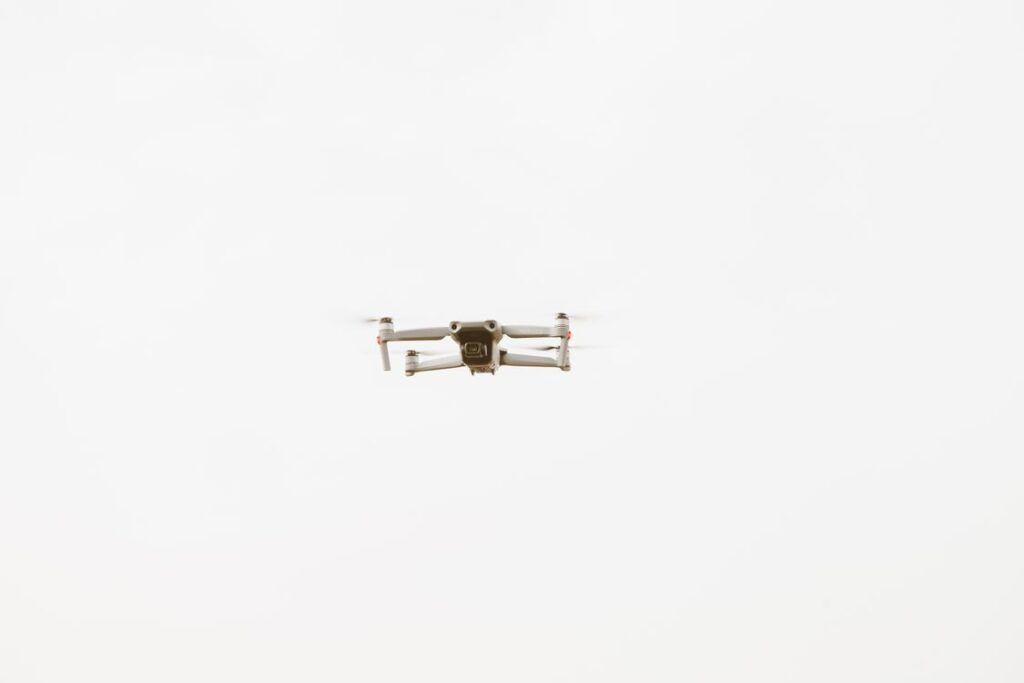
Israel has warned the United States that Iran is planning a drone attack targeting President Donald Trump and senior members of his administration, according to a report published on Saturday, November 14. The warning, first reported by the Israeli newspaper Israel Hayom, has already changed daily life at the top of the American government: several of the president’s most senior officials have moved out of their homes and onto military bases, and Trump himself has cut back his public appearances.
The report, citing senior Israeli and American officials, says Israel’s intelligence agency, the Mossad, passed specific intelligence about the alleged plot to the Central Intelligence Agency. According to the report, American intelligence agencies had asked Israel to help verify information about the threat, and both agencies assessed the intelligence as credible.
It is important to be clear about what has and has not been confirmed. The alleged Iran drone plot against Trump has not been independently confirmed by the CIA, the White House or the Iranian authorities. No American official has publicly confirmed the specific plot described in the report. What is confirmed is the response: senior officials have moved to secure facilities, and the president has cut back his public schedule.
What Mossad told the CIA about the Iran drone plot against Trump
According to Israel Hayom, the Mossad shared intelligence indicating that Iran was planning an operation involving drones against senior American leadership, with President Trump as the main target. The newspaper said the intelligence was specific and recent.
Mossad Director Roman Gofman is in Washington for talks with senior Trump administration officials about Iran, according to Axios. Gofman is meeting CIA Director John Ratcliffe as Prime Minister Benjamin Netanyahu presses President Trump to resume combat against Iran — pressure Trump has so far resisted.
The timing matters. The United States and Israel fought a war with Iran earlier this year, and the ceasefire has been fragile. Trump said this week that the war was “militarily effectively over” and that new strikes were highly unlikely, while Reuters reported he may hold off unless Tehran or the Houthis carry out new provocations. A plot against the president himself would be exactly the kind of provocation that could change that calculation.
The country’s deputy armed forces chief, Keyoumars Heydari, vowed on state television this week to kill Trump and Netanyahu, and Iran’s security chief, Mohsen Rezaei, has threatened to strike US military bases in Europe if Trump orders renewed attacks.

Top officials moved to military bases
The most visible consequence is already on display in Washington. Treasury Secretary Scott Bessent confirmed on November 13 that he had moved from his home in Washington’s Georgetown neighbourhood to a military base on the instructions of the Secret Service, saying Iran had made death threats against him.
“I’m not going to be cowered that they have initiated death threats against me,” Bessent said in an interview with CNBC, adding that the Islamic Revolutionary Guard Corps was acting “like a dangerous cornered animal.”
Bessent is not alone. Secretary of State Marco Rubio, Defence Secretary Pete Hegseth and White House Chief of Staff Stephen Miller have also moved into military housing, according to news reports. Attorney General Todd Blanche has been living on a military installation in the Washington area for months, according to sources cited by Fox News. USA Today reported that Rubio and Hegseth live at Fort McNair in Washington, DC.
The moves have different causes: Miller moved into military housing in September 2025 after harassment at his Virginia home, according to The Atlantic, while Bessent’s followed Iranian threats described to Reuters as advanced and serious — and a published photograph that allowed his home to be located.
Bessent is a particular target: since August he has led the administration’s economic pressure campaign against Tehran, known as Operation Economic Outcast, using tougher sanctions to cut off funding to the Revolutionary Guard.
The threat extends beyond the cabinet: on November 10, the FBI placed alleged Iranian operative Majid Poursafi on its Most Wanted Terrorists list, and the Justice Department indicted three Iranian-backed operatives suspected of nearly 20 plots across the United States and Europe.
Trump has also reduced his public appearances since the warning arrived, and cancelled a golf outing scheduled for Saturday. The White House has not publicly commented on the specific drone plot.
A pattern of threats — and a record of unverified warnings
Iran has wanted to kill Trump since he ordered the 2020 drone strike that killed General Qasem Soleimani, commander of the Revolutionary Guard’s Quds Force. In 2024, the Justice Department accused the Guard of plotting to assassinate Trump on the campaign trail, and federal agents were assigned to protect former officials including John Bolton, Mike Pompeo and Brian Hook.
But the report arrives with a credibility question. In August, the Washington Post reported that US intelligence had been unable to independently verify several specific Iranian threat warnings supplied by Israel — including the most detailed one, a warning ahead of the July NATO summit in Ankara that Iran might try to kill Trump with a shoulder-launched missile as he travelled on Air Force One. CIA analysts did not find it compelling, and a Turkish official said his country’s agencies found no evidence to corroborate it.
The warning still triggered an extraordinary operation: on July 8, the Secret Service secretly moved Trump from Air Force One to a smaller jet, transporting him inside an airport catering vehicle. Investigators later found no evidence of an operational plot.
Some US officials believed the earlier warnings were designed less to warn than to influence policy — to push Trump towards restarting the war and to damage his ties with Turkey. That history does not make the new warning false. It means the White House faces the same dilemma: act on intelligence it cannot fully verify, or risk ignoring a genuine threat.
There is also a British dimension. In October, US officials told Reuters that fears of an Iranian drone attack led the United States to remove its B-1 bombers from RAF Fairford, the US-run base in western England used by American bombers during this year’s war. British police have arrested seven men in the investigation, and Prime Minister Andy Burnham has said the suspected plot was almost certainly directed by the Revolutionary Guard. Iran has denied involvement. On Friday, November 13, personnel at RAF Lakenheath in Suffolk were told to shelter in place after suspected drone activity; the base confirmed on November 14 that security had returned to normal.
What happened in the Gulf this week
The drone warning came at the end of a tense week in the Gulf. Iran claimed early on Friday that its forces had destroyed a United States early-warning radar in Bahrain — the first time in more than two months that Tehran has said it struck an American military target in the Gulf. The United States military says the claim is false. US Central Command said on November 13 that the Revolutionary Guard launched two one-way attack drones toward Bahrain and that both were shot down by US forces, with no injuries or damage. For the full account of that incident, see our earlier report on Iran’s claim that it destroyed a US radar in Bahrain.
The episode shows how quickly claims and counter-claims now fly between Washington and Tehran, and how hard each is for outsiders to verify. That is the context in which an alleged plot to kill the president himself lands — the latest step in a confrontation that has already produced open warfare this year.
What happens next
Three things will determine where this story goes. The first is whether the White House or the CIA says anything publicly. So far neither has confirmed the plot, leaving the public to rely on the Israeli newspaper’s account and the visible evidence of officials moving to bases.
The second is what Trump decides about Iran. Netanyahu is pressing him to resume military operations, and the Mossad’s chief is in Washington making the case in person. Trump has so far been reluctant to authorise another round of large-scale strikes. An assassination plot against the president would be a powerful argument for those who want to strike back — and a test of his statement that the war is effectively over.
The third is the diplomatic calendar. Trump is due to meet China’s Xi Jinping and Russia’s Vladimir Putin in Shenzhen on Thursday, November 19, in the first-ever three-way meeting in Shenzhen on November 19 of the leaders of the world’s three biggest nuclear powers — and Iran is almost certain to be on the agenda.
For now, the facts are: Israel says it warned the CIA of an Iranian drone plot against Trump and his top officials; several of those officials now live on military bases; the president has scaled back his public appearances; and the alleged plot has not been independently confirmed. Until the White House speaks, that gap between the warning and its verification is the story.