
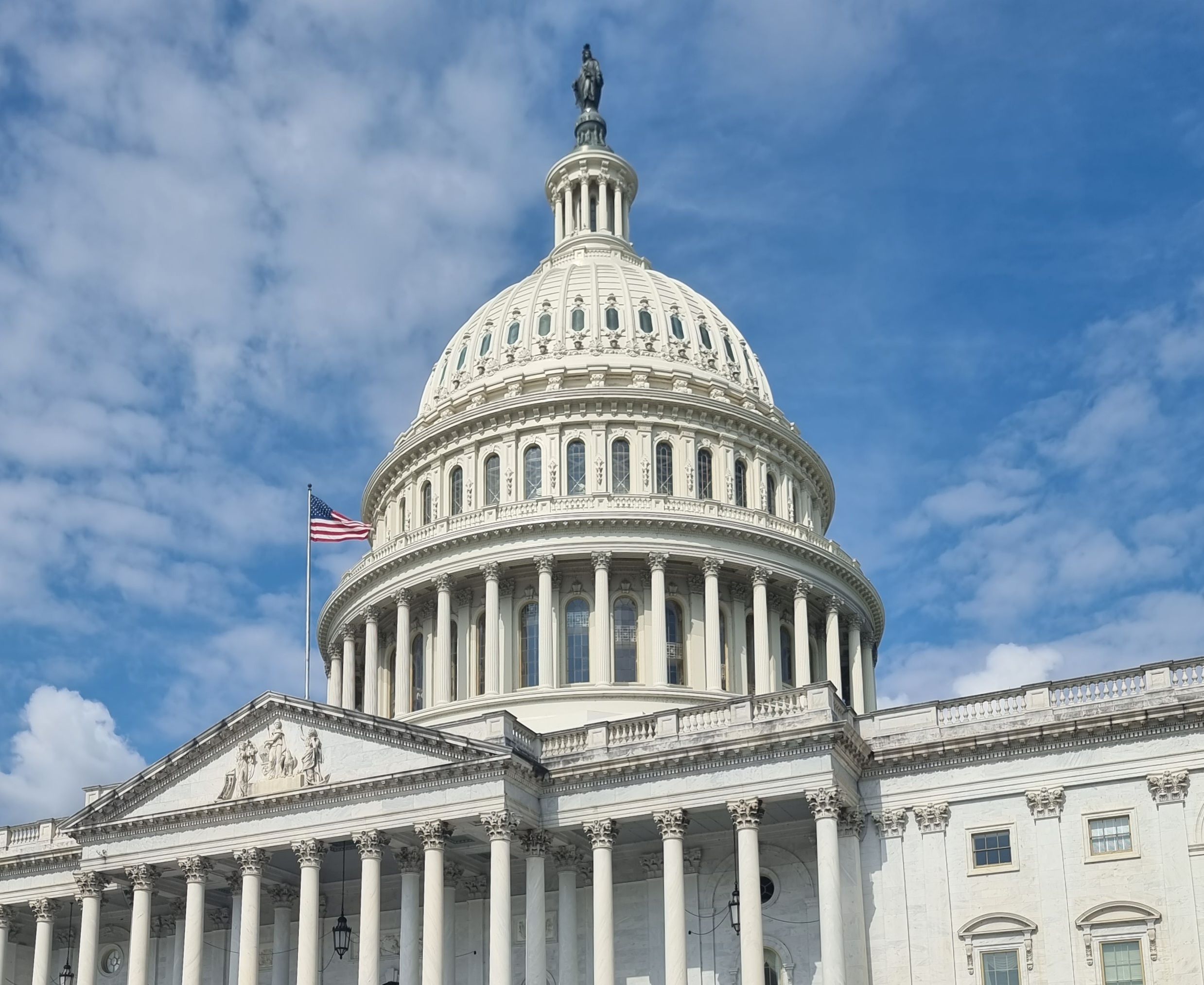
When the 120th Congress convenes in January, it will include the largest class of new Black Democratic lawmakers in more than 30 years. Thirteen new Black Democrats will take their seats, according to a Reuters analysis of the November midterm results — the biggest single intake since 1993, and one that arrives despite a Republican-led redistricting effort designed to make their path harder.
The result sets up a direct test of whether increased Black representation in Congress can translate into real legislative power. The new members join a Democratic Party that won control of Congress in the midterms and must now govern — while a Republican president, Donald Trump, holds the White House and a veto pen. For a party whose most reliable voters are Black Americans, the makeup of its new intake matters far beyond symbolism. It will shape which bills get pushed and which issues get prioritised.
A record class, three decades in the making
The headline figure is 13: the number of new Black Democratic members who will join Congress in January, the largest cohort since 1993, according to data from the House historian cited by Reuters. In 1993, 16 first-time Black members joined when Congress convened, and 17 had joined by the end — the most of any Congress.
The Congressional Black Caucus, the group that represents Black lawmakers in Congress, will enter the new session with a record 64 members, up from 62. Every current member of the caucus is a Democrat. That growth matters because the caucus has long functioned as an organised bloc inside the party, pushing leadership on committee assignments and priorities that might otherwise be sidelined.
“Part of the reason why the Congressional Black Caucus formed is so that they could convince leadership to put Blacks on key committees,” Andra Gillespie, a professor at Emory University who studies African American leadership in politics, told Reuters. Committee seats are where much of the real work of Congress happens: bills are written, amended and killed in committee long before they reach the floor.
The shift echoes the 1990s, when efforts to expand Black political representation helped bring a new generation of lawmakers into Congress — many of whom went on to gain seniority and influence over decades. Dedrick Asante-Muhammad, president of the Joint Center for Political and Economic Studies, told Reuters the parallels with that era are real, and so is the opportunity. The question now is whether the class of 2026 can turn a historic intake into lasting influence the way the class of 1993 did.
Younger lawmakers, arriving despite redrawn maps
The new class is notably younger than the delegation it joins. Four of the first-time Black House members are 34 or younger, and more than half of all Black House members were first seated in 2021 or later, according to the Reuters analysis. At the other end of the caucus, its senior Black leaders include Representative Maxine Waters of California, 88, and Representative Bennie Thompson of Mississippi, 78.
The youngest of them is Melat Kiros, 29, the first woman from Generation Z elected to Congress and the first Black woman to represent Colorado. She is one of four first-time Black House members aged 34 or younger, alongside Darializa Avila Chevalier of New York and Adrian Boafo of Maryland, both 32, and Donavan McKinney of Michigan, 34.
That they won at all is significant, because the maps were drawn against them. Four districts held by Black Democrats were among those Republican-led state legislatures redrew to gain seats, in a push that intensified after the Supreme Court’s April ruling weakened the Voting Rights Act of 1965. Democrats Shomari Figures and Don Davis won reelection in Alabama and North Carolina respectively, holding seats where the lines had been redrawn around them, while Democrat Leticia Gutierrez — who does not identify as Black — won a redrawn district in Texas previously held by Democrat Al Green.
Overall, Black candidates won 58 seats in the 435-member House for the 120th Congress, down from 61 in the current Congress. Two additional Black candidates in Louisiana are headed to runoffs on December 12. In a majority-Black Louisiana district redrawn in May, Democrat Chauna Banks will face Republican Blake Miguez, while in a neighbouring district Democrat Patricia Moore will take on Republican Gabe Firment.
A record seven in the Senate
The change is even more striking in the Senate, where Black representation has reached a record seven members. That follows the election of Democrat Juliana Stratton in Illinois and the upset victory of Mississippi Democrat Scott Colom.
Colom’s win is the more remarkable of the two. He will be Mississippi’s first Black senator in more than 140 years, a milestone in a state with one of the largest Black populations in the country and one of the deepest histories of racial exclusion from political power. Senator Raphael Warnock of Georgia, a Democrat and the 11th Black senator in US history, donated to and campaigned for Colom, and told Reuters that lawmakers must begin shaping their policy agenda before Congress convenes in January.
The Senate picture is not one-sided. Four Black Republicans will leave Congress, leaving Senator Tim Scott of South Carolina as the only Black Republican in either chamber. Black representation in Congress is therefore both larger and more politically concentrated than ever: bigger in total numbers, but almost entirely on the Democratic side of the aisle. That concentration gives the caucus a clearer identity — but it also means Black lawmakers’ influence will rise and fall largely with the Democratic Party’s fortunes.
What the new class could change
The influx of Black lawmakers could reshape Congress’s legislative priorities on voting rights, healthcare affordability and economic inequality, according to political observers cited by Reuters. Those three issues have been central to Black voters’ concerns for years, and the new members arrive with a mandate to push them.
Voting rights is the most direct link between the new class and the conditions of its own election. The new members won seats in a cycle shaped by redistricting and by a Supreme Court ruling that weakened the Voting Rights Act — the law that once protected Black voters’ ability to elect candidates of their choice. Expect the new intake to press for federal voting protections, making the case from personal experience.
Healthcare affordability is the issue most likely to reach the floor first. Democrats are already coalescing around plans to expand Medicare coverage to more Americans when they take control of Congress in January, and the new members’ support will be needed to pass any version of that plan. Economic inequality — wages, housing costs and the racial wealth gap — is the longer-term agenda, and the one where a younger intake may push the party in new directions.
Whether that influence materialises will depend on committee assignments, relationships with leadership and the ability to build coalitions. The new class has numbers and energy on its side. What it does not yet have is seniority — and in Congress, seniority still counts. There is also a hard limit on what the class can achieve on its own: most major legislation will still require bipartisan support in the Senate, and President Trump can veto bills passed by Congress.
The test for Democrats — and for Jeffries
The generational mix will be tested at the top of the party. Representative Hakeem Jeffries of New York, the Democrat favoured to become House speaker when the new Congress convenes, will have to manage a caucus that includes both moderates and progressives who want to move the party beyond its established leadership. The new Black members sit across that divide, and how Jeffries handles their ambitions — for committee seats, for floor time, for a real say in the agenda — will be one of the first measures of his speakership.
The test is also political. Democrats won the midterms on a promise to deliver for the voters who put them in power, and Black voters were central to that victory. If the new Congress produces visible progress on voting rights, healthcare and economic opportunity, the party can claim representation delivered results. If the new class is sidelined, or its priorities stall in the Senate or on the president’s desk, the party risks the charge its critics have levelled for years: that it takes Black voters for granted.
What happens next
The new members will be sworn in when the 120th Congress convenes in January, and the first real test of their influence will come quickly: the election of the House speaker, the assignment of committee seats and the first votes on the Democratic agenda. The two Louisiana runoffs on December 12 will settle the final size of the Black House delegation, and could add two more members to the record intake. The first bills they co-sponsor and the committees they join will be the earliest signals of where this class intends to make its mark.
Beyond January, the class of 2026 will be judged on a simple question: did the largest intake of new Black Democrats in more than 30 years change what Congress actually does? The numbers are historic. The maps were hostile. The moment is real. Whether it becomes a turning point — the way 1993 was — will be decided not by the size of the class, but by what it manages to pass.