

OTTAWA — Canada is running out of time to stop the next round of American tariffs, and its own trade minister is now telling business and political leaders that Washington is barely moving.
Canada is still seeking an interim arrangement with the United States to ease some US tariffs on its goods, but Washington has shown little movement, the Canadian minister responsible for trade with the US, Dominic LeBlanc, told an advisory committee on Thursday, according to two people familiar with the briefing. US tariffs on Canadian steel, autos and lumber are set to rise in January to 50 percent from 25 percent, and industry groups have warned it could dismantle decades-old supply chains and cost jobs and factory output.
The warning lands six weeks before the deadline. Ottawa says it is ready to move fast if Washington moves at all. “The US understands what our red lines are and our people are saying that if the US makes movement, then we can move quickly. But so far the US has made no movement,” one of the people said, summarising LeBlanc’s briefing to the committee.
What LeBlanc told the committee
LeBlanc told the Advisory Committee on Canada-US Economic Relations, which includes business leaders and politicians, that he is in regular contact with his American counterparts, but that there has been little progress since talks broke down in August. His office confirmed that he briefed the committee and reaffirmed Canada’s commitment to striking a mutually beneficial agreement.
The briefing matters because it is the clearest picture yet of where the negotiations stand after three months of drift. LeBlanc has been speaking with US Commerce Secretary Howard Lutnick and US Trade Representative Jamieson Greer, who led most of the dialogue in August before the talks collapsed. Neither department immediately responded to requests for comment, Reuters reported.
The people familiar with the briefing said the midterm elections, in which President Donald Trump’s Republican Party lost control of Congress to the Democrats, have not changed the course of the trade negotiations. Many in Ottawa had hoped the Democratic sweep on November 3 would soften Washington’s position. So far, it has not.
The January 1 deadline: what rises to 50 percent
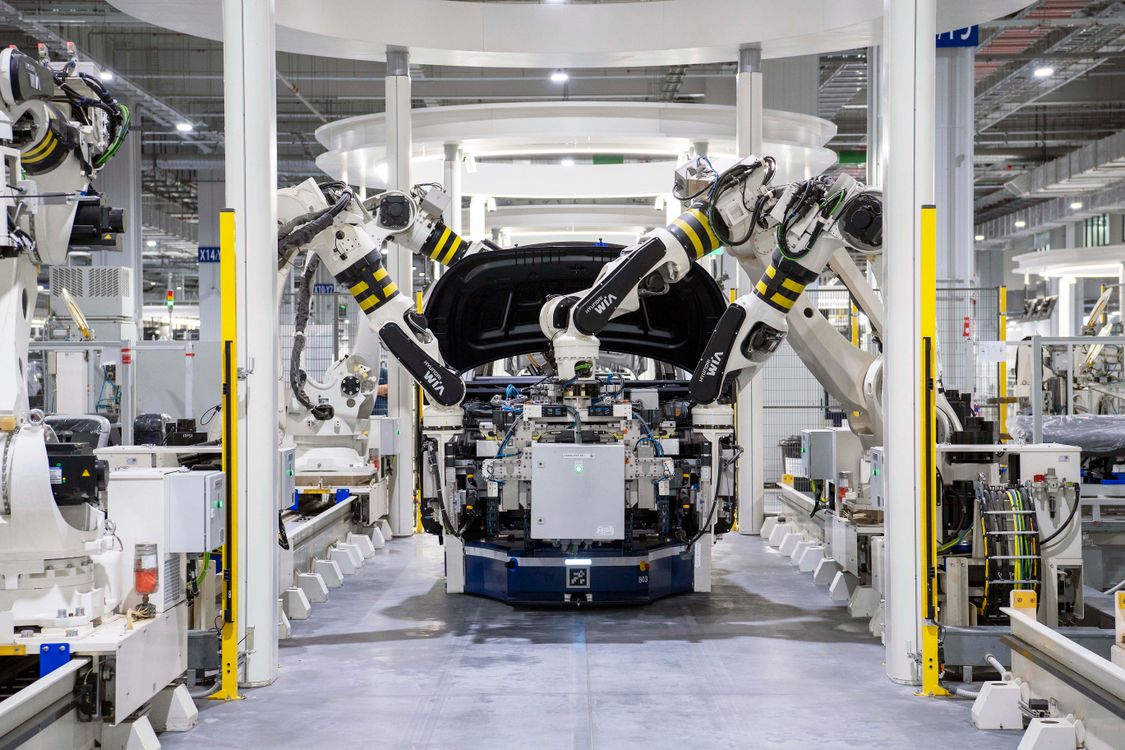
President Trump announced in August that tariffs on all Canadian cars, trucks, automotive parts and steel will rise to 50 percent on January 1, 2027. “On January First, 2027, Tariffs on all Cars, Trucks, both large and small, Automotive Parts, and Steel, will be increased to 50%,” he wrote on his Truth Social account on August 24. He cited a 60 billion dollar trade deficit with Canada as justification.
The January increase would double the current 25 percent tariff on Canadian-built vehicles. Steel is the exception: American duties on Canadian steel already sit at 50 percent in many cases, so that part of the announcement largely formalises the status quo.
The escalation is already partly in force. A separate round of 50 percent tariffs on roughly 20 billion dollars of Canadian goods took effect on August 22, after the talks collapsed. Canada answered on September 8 with retaliatory tariffs worth about 27.6 billion Canadian dollars of American imports.
For the auto industry, the January deadline matters most. Cars and parts cross the Canada-US border several times before a finished vehicle rolls off the line. Jennifer Thomas, Honda’s head of public affairs in the US, warned an industry conference in Detroit that the January increase would be catastrophic for the North American auto industry. General Motors has already felt the cost: its gross tariff costs totalled 3.1 billion dollars in 2025.
How the dispute got here

In March 2025, the United States imposed 25 percent tariffs on imports from Canada outside the Canada-US-Mexico Agreement, known as CUSMA, plus 25 percent on steel and aluminium and 10 percent on Canadian energy and potash. The two countries spent the spring and summer negotiating reductions to the auto, steel and aluminium duties. Those talks broke down in August.
On July 20, President Trump signed three proclamations imposing additional duties of up to 50 percent on certain Canadian goods under Section 338 of the Tariff Act of 1930, a statute no president had ever used to impose tariffs in the 96 years since it became law. Section 338 duties carry no expiration date. On August 21, Prime Minister Carney suspended the negotiations. The next day, the 50 percent duties took effect, and three days later Trump announced the January 1 increase. Canada’s retaliatory tariffs followed on September 8.
The legal framework has also shifted. The United States declined to extend CUSMA on July 1, 2026, during the agreement’s scheduled six-year review, removing the treaty’s protection from many Canadian goods.
There was a brief moment of optimism last week. Carney said last week that the two countries were making progress after a long call with President Trump, but that no agreement had been reached. LeBlanc’s briefing suggests that progress has not yet turned into movement at the negotiating table.
What it means for factories, jobs and prices
The cost is concentrated in a handful of places: the auto plants of southern Ontario, the steel mills of Hamilton, the lumber towns of British Columbia and Quebec, and the factory towns of the American Midwest that depend on Canadian parts. Industry associations have warned that the January increase could dismantle decades-old supply chains and lead to job losses and factory shutdowns.
For consumers, the effects are slower but real. Tariffs are paid on imported goods, and they raise prices for buyers on both sides of the border. Ontario Premier Doug Ford has said Canada should be prepared to restrict electricity and critical-mineral exports to the United States if the dispute worsens, a threat that shows how far the argument has travelled from cars and steel into energy and raw materials.
The politics: Democrats, Neal and the new Congress
The politics are changing, even if the negotiations are not. Representative Richard Neal of Massachusetts, the Democrat expected to regain the chairmanship of the tax- and trade-focused House Ways and Means Committee in January, has made reversing the tariffs a central promise. He said in an interview this week that repairing relations with Canada and Mexico must become a priority.
“I am committed to reversing Trump’s unjustified tariffs and pursuing trade policy that is grounded in good governance and transparency,” Neal said on November 6 at a trade conference hosted by former US Trade Representative Katherine Tai. He said his priority is keeping both Canada and Mexico inside CUSMA, and that the agreement’s six-year review provides room to improve it.
House Democratic leader Hakeem Jeffries has listed eliminating Trump’s tariffs among his first-100-days priorities, and Senator Ron Wyden of Oregon, in line to chair the Senate Finance Committee, has called repealing the Canada tariffs a likely first target.
There are limits to what Congress can do. The House voted 219-211 to end the national emergency behind the Canada tariffs on November 12, with six Republicans joining nearly every Democrat, but ending the tariffs would require the president’s signature, which is highly unlikely, and the measure must still pass the Senate. The 50 percent tariffs take effect on January 1, two days before the new Congress is seated.
What happens next
Three dates now matter more than any others. The first is January 1, 2027, when the 50 percent rate on Canadian cars, trucks, parts and steel takes effect unless a deal intervenes. The second is January 3, when the new Democratic-controlled Congress is seated and Neal takes the Ways and Means gavel. The third is January 12, when comments are due for the 2027 review of the CUSMA agreement.
Between now and January 1, the likeliest path is the one Ottawa is already pursuing: an interim arrangement that eases some tariffs and buys time for a fuller deal. LeBlanc’s briefing suggests the United States has not yet engaged with that idea, but the deadline itself is a negotiating clock.
If no deal comes, the consequences will arrive quickly. Canadian auto plants would face a doubling of the duty on every vehicle they ship south, American manufacturers would pay more for Canadian steel and parts, and Ottawa’s retaliation would spread the cost to American exporters. For now, Ottawa is ready to move and waiting for Washington to move first. That wait has already lasted three months.