
A wave of hoax bomb threats swept across Europe on Friday, November 6, 2026, disrupting passenger flights and forcing television stations off the air in what officials are calling a coordinated campaign of disruption. At least 18 flights were affected on Friday alone, Ireland’s national broadcaster RTÉ evacuated its Dublin headquarters, and fighter jets were scrambled to escort passenger planes through Hungarian airspace. No explosives were found anywhere, and no one was hurt — but the episode showed how easily a few emails can throw a continent’s transport and media into confusion.
Flights diverted and escorted by fighter jets
The aviation disruption began early on Friday and spread quickly across the continent. A Ryanair flight from Lisbon to Rome was threatened before departure, and a Wizz Air flight from Prague to Rome was diverted to Venice after a hoax alert. A Tarom flight from Prague to Bucharest was also targeted, and Prague’s Václav Havel Airport reported that at least nine flights arriving or departing from the airport were affected. In Ireland, a flight from Cork Airport was delayed by 90 minutes after a direct threat to the airport operator, and the French prime minister’s office confirmed four separate bomb threats against aircraft flying over French territory.
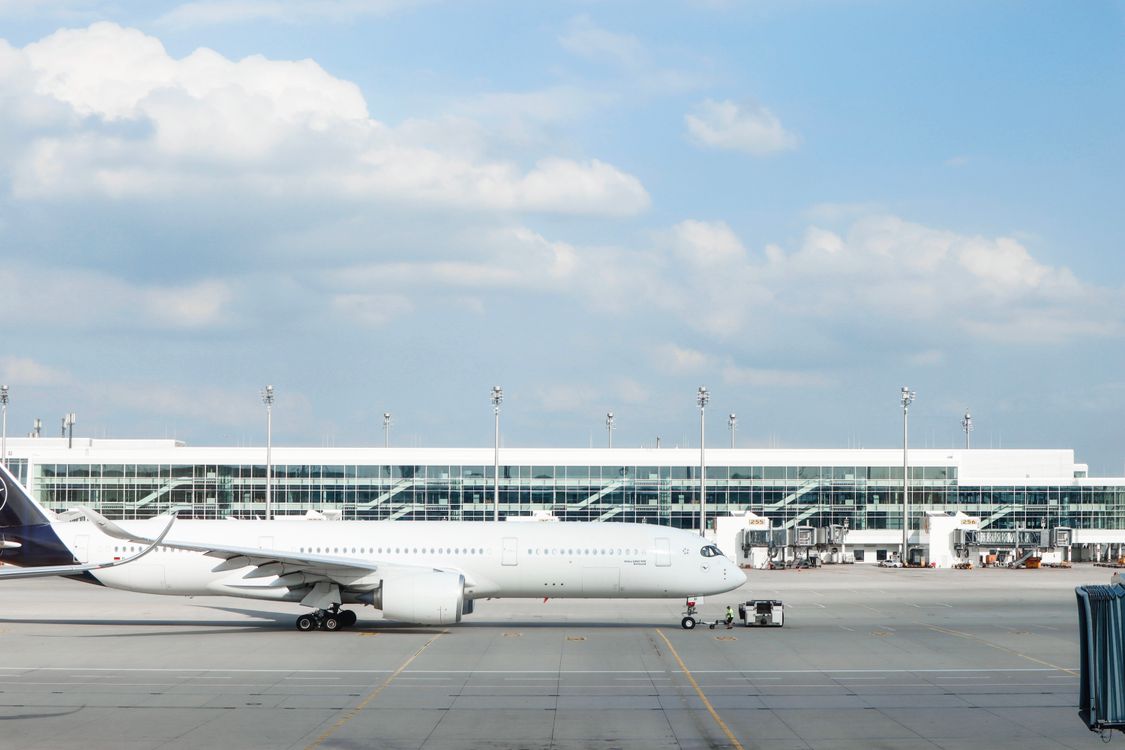
Hungary’s defence minister said fighter jets escorted three passenger planes through Hungarian airspace within a single hour on Friday after each aircraft received a bomb threat. The jets flew alongside the airliners — including routes from Brussels to Sofia and Prague to Bucharest — until they were safely out of Hungarian skies. Similar escorts had been used earlier in the week, when threats forced planes to divert and make emergency landings.
Despite the scale of the disruption, the European air traffic authority Eurocontrol said the overall impact on aviation was relatively small compared with the size of the network. It recorded bomb threats against 14 flights on Thursday and seven on Tuesday, out of nearly 26,300 flights across the European network on Thursday alone. Every affected aircraft landed safely, and no suspicious items were found on any of them. Airlines, however, have little choice but to treat every threat as real, even when the previous warnings have all turned out to be hoaxes.
TV stations evacuated as threats spread to newsrooms
On Friday the campaign moved beyond aviation and into newsrooms. Ireland’s public broadcaster RTÉ received an email in the morning warning that an explosive device had been planted in its Donnybrook headquarters in Dublin. Staff were evacuated, live broadcasts were suspended for up to three hours, and programming was replaced with pre-recorded music and safety messages. RTÉ’s director general, Kevin Bakhurst, said the evacuation was a precaution to protect employees.

Other Irish media organisations were hit the same day. Dublin radio station Newstalk and the Irish Independent newspaper also evacuated staff after receiving similar threats. In Bulgaria, Nova TV received a threatening email, and in Britain, Sky News confirmed it had received a security threat, saying it was working closely with the authorities to keep its people and operations secure. Sky News remained on air, while Nova TV continued broadcasting even as its newsroom was searched. Gizmodo reported that the wave of threats was bringing European flights and TV stations to a halt.
The emails sent to the broadcasters were strikingly similar. They were signed with the name “Mikhail Andropov” — a reference to Yuri Andropov, the former Soviet leader and KGB chief — and carried the same chilling line: “We want the whole world to know about us, which is why one of our operatives has planted an explosive device in your building. It will detonate in 45 minutes. The clock is ticking.” The messages also claimed responsibility for the series of bomb threats against passenger aircraft and warned of further attacks on transport infrastructure.
A week of escalating disruption
Friday’s wave was the third in a single week. Dozens of flights had already been targeted earlier in the week, with threats forcing diversions, emergency landings, airport searches and even fighter-jet escorts. The Guardian reported at least 18 flights disrupted on Friday, after more than two dozen on Thursday. The threats have now touched airports and airspace in Bulgaria, Cyprus, Czechia, France, Hungary, Italy, Portugal, Romania, Ireland and Britain.
The campaign has arrived against a backdrop of other unexplained disruptions across Europe, including attacks on supermarket refrigeration systems and repeated drone incursions near airports and military sites. European officials and security experts have described the pattern as “hybrid aggression” — low-cost actions designed to create fear and disruption without open warfare — and have warned that it may be linked to Russia’s broader strategy of psychological warfare against countries that support Ukraine. No official link has been established between the bomb threats and any state, and the identity of the sender has not been confirmed. For related security coverage, see our report on the US strikes on Iran’s Qeshm Island.
Who is behind the threats?
So far, nobody knows for certain who is sending the threats — or whether one person, one group, or several unconnected copycats are responsible. Irish police, the Garda Síochána, said they were aware of threats against media organisations in Ireland and across Europe, but declined to say whether the messages came from the same source. Police have also not confirmed whether the threats against news organisations and the threats against aircraft came from the same individual or group.
One intelligence analyst told the Associated Press there could be a Russian angle to the campaign, while noting that Iranian hybrid warfare is also active in Europe. The FBI is monitoring the situation and providing assistance to European police, but a source familiar with the investigation said there is “no evidence right now” that an American person or group is responsible for the hoaxes.
The Irish government has said the threats are likely a “coordinated campaign of disruption,” while conceding that it is not yet known who is responsible, “whether it is individuals or a centralized or coordinated effort.” That uncertainty is part of what makes the campaign so unsettling: the threats are cheap to send, almost impossible to ignore, and — so far — impossible to trace to a single source.
Europe’s response
European governments moved quickly to coordinate their response. Irish Prime Minister Micheál Martin called the situation “worrying” and said the threats showed “how relatively simple it can be to cause disruption and to undermine the normal operation of society through unconventional activities of this kind, which are designed to cause fear and anxiety.” He said Irish police, military personnel, cybersecurity specialists and aviation officials were working with European counterparts to identify those responsible. In Washington, the Hegseth impeachment vote has also kept security policy in the headlines.
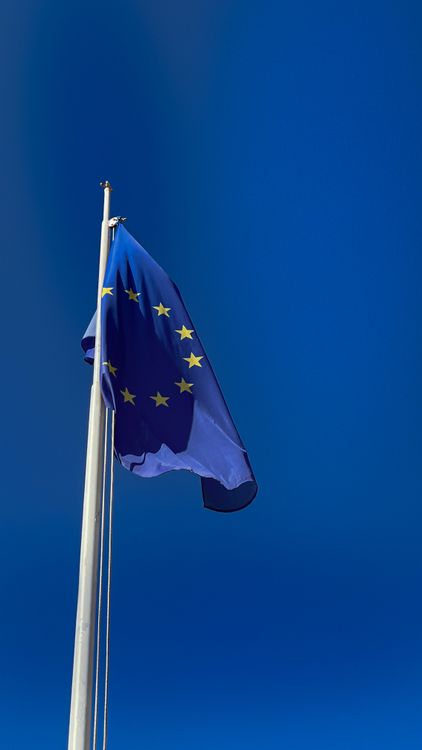
Apostolos Tzitzikostas, the European Union’s transport commissioner, said security experts from countries across the bloc were already in contact and would “meet again in Brussels to review the situation and discuss the measures that may be necessary.” Eurocontrol said it was monitoring the situation and working closely with airlines, airports, navigation service providers and other groups across Europe “to mitigate any disruption to air traffic flows.”
What happens next
The Brussels meeting next week will be the first test of whether Europe can turn a week of chaos into a coordinated defence. Officials are expected to discuss how airlines, airports and broadcasters share threat information more quickly, and whether the pattern of threats points to a single organised campaign that requires a joint law-enforcement response. Investigators in several countries are also working to trace the emails, although hoax threats sent through anonymous accounts are notoriously hard to attribute.
For travellers, the immediate advice is practical rather than alarming: check flight status before heading to the airport, allow extra time, and expect delays if a threat is reported. For broadcasters and other high-profile targets, the lesson of Friday is that the threat has moved beyond aviation — any organisation that depends on the public’s trust can be forced off the air by a single email.
The most important fact of the week remains the simplest one. No bomb has been found. No one has been injured. Every plane that was threatened landed safely, and every broadcaster that was evacuated is back on the air. The campaign has so far produced disruption and fear, and nothing else — but it has also shown European governments that a handful of anonymous messages can paralyse flights, empty newsrooms and scramble fighter jets. That is a vulnerability Europe will now have to close, before the next wave arrives.