
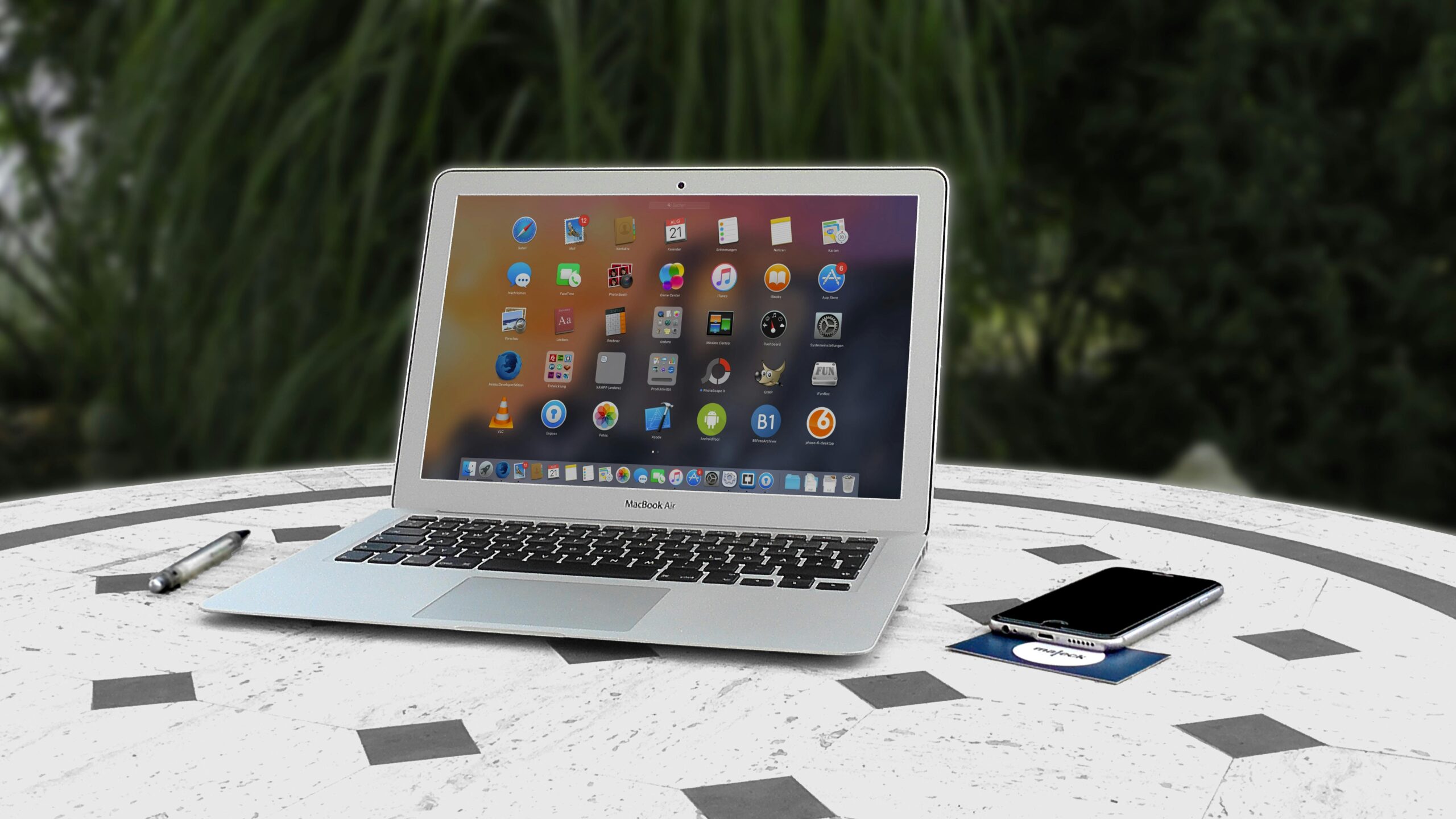
Apple has finally done what it swore for years it would never do: it put a touchscreen on a Mac. The new MacBook Pro with PROLED XDR display — Apple’s first touchscreen MacBook — arrives in stores on Friday, November 6, 2026, and the first reviews landed this morning, November 5. The verdict is consistent: the screen is extraordinary, the touchscreen is a nice bonus rather than a revolution, and the price will make many buyers pause.
Announced on October 28, 2026, the new 14-inch and 16-inch models pair a tandem OLED display with Apple’s M5 Pro and M5 Max chips, a lighter and thinner design, and the return of the glowing Apple logo. Prices start at $2,899 for the 14-inch model and $3,399 for the 16-inch model, with pre-orders open in 30 countries, including the United States, the United Kingdom and Canada.

The reviews are in: the display steals the show
Every major review published on November 5 agrees on one thing: the PROLED XDR display is the best screen ever fitted to a laptop. Pocket-lint called it “without a doubt, the best laptop display I’ve ever used,” praising vivid colours, deep blacks and excellent contrast. XDA-Developers called it “the best display I’ve ever seen in a laptop” and awarded the machine 8 out of 10 overall.
The Verge’s David Pierce was more measured about the touchscreen, saying that in his testing so far touch input has not “meaningfully changed the laptop experience” — but he still recommends the new models regardless, for the OLED display and the other upgrades. MacRumors’ roundup found the same pattern: display quality is the upgrade everyone expected to lead the conversation, and it does.
That consensus matters, because the display is also the reason this laptop costs $400 more than the standard MacBook Pro with the same M5 Pro chip.
PROLED XDR: what the tandem OLED display actually delivers
PROLED XDR is Apple’s name for a tandem OLED panel — two layers of OLED stacked together to produce far more brightness than a single layer can manage. The result is a display that reaches up to 2,000 nits of peak brightness for both SDR and HDR content, with a 10,000,000:1 contrast ratio. Because OLED pixels produce their own light and switch off completely for black, dark scenes show true black instead of the grey glow of a backlit LCD.
The 14-inch model has a 14.2-inch panel at 3,024 x 1,986 pixels, while the 16-inch model has a 16.3-inch panel at 3,472 x 2,266 pixels. Both support ProMotion adaptive refresh rates up to 120Hz, True Tone, and the P3 and Adobe RGB colour gamuts, displaying up to 1 billion colours. For photographers and video editors, Adobe RGB support is a genuine working advantage. For everyone else, the benefit is simpler: HDR films and photos look dramatically better, and the screen stays readable in bright rooms. Apple also offers an optional nano-texture glass finish that cuts glare, for an extra $150.
A touchscreen on a Mac — finally, but does it matter?
For more than a decade, Windows laptops have shipped with touchscreens while Apple insisted touch belonged on the iPad, not the Mac. That position is now history. The MacBook Pro with PROLED XDR is the first Mac with a built-in touchscreen, and Apple says touch makes moving windows and scrolling easier, while artists can draw directly on the screen.
Reviewers found the touchscreen responsive and well implemented, with Apple-style touches such as an expanding context menu on a long-press. Pocket-lint’s reviewer said it was very responsive, with no apps failing to recognise touches, and admitted to using it much more than expected. XDA-Developers agreed it is responsive, but concluded the touchscreen is not game-changing — most Windows laptops have offered the same thing since the Windows 8 era, more than a decade ago.
That split captures the honest truth. Touch is genuinely useful for specific jobs: scrubbing through a video timeline, zooming into a photo, signing a document or sketching an idea. For everyday work — writing, coding, spreadsheets, browsing — most people will keep using the keyboard and trackpad. The touchscreen is a handy extra, not a new way to use a Mac, and nobody should buy this laptop for touch alone.
M5 Pro and M5 Max: familiar power in a new body
Under the display, the new MacBook Pro runs on the same M5 Pro and M5 Max chips found in the standard MacBook Pro models, so performance is similar. The M5 Pro comes with a 15-core or 18-core CPU and a 16-core or 20-core GPU, while the M5 Max offers an 18-core CPU with a 32-core or 40-core GPU. Memory starts at 24GB and goes up to 128GB, and storage starts at 1TB and goes up to a new 16TB option.
Early benchmarks look strong. Pocket-lint ran Geekbench 7 on a 16-inch model with the M5 Pro and 48GB of RAM and recorded 3,665 single-core and 33,237 multi-core. That is flagship territory, comfortably fast for 4K and 8K video editing, 3D rendering and heavy multitasking.

Battery life is rated at up to 22 hours of video streaming and 14 hours of wireless web browsing with the M5 Pro, or up to 20 and 13 hours with the M5 Max. The 14-inch model carries a 72.6Wh battery and the 16-inch a 100Wh battery. There are three Thunderbolt 5 ports, support for multiple external displays, and a 12MP camera. The laptop runs macOS 27. Apple has also slimmed the machine down: the 14-inch model weighs just 3.0 pounds and the 16-inch 4.0 pounds, and the glowing Apple logo on the lid has returned.
Price and configurations: what you actually pay
The 14-inch MacBook Pro with PROLED XDR starts at $2,899 with the M5 Pro chip, and the 16-inch model starts at $3,399. M5 Max configurations start at $4,499 for the 14-inch and $4,799 for the 16-inch. In Canada, the 14-inch M5 Pro starts at $3,999 CAD and the 16-inch from $4,799 CAD, with M5 Max versions from $6,299 CAD.
The key comparison is with the standard 14-inch MacBook Pro with the M5 Pro chip, which starts at $2,500. The touchscreen OLED model therefore carries a $400 premium for the new display, the touch layer and the lighter chassis. Whether that premium is worth it depends almost entirely on how much you value the screen.
MacBook Pro PROLED XDR vs the regular M6 MacBook Pro
Apple complicated the buying decision by launching a second new MacBook Pro at the same time: a 14-inch model with the brand-new M6 chip, starting at $1,999. It keeps the familiar design and the mini-LED Liquid Retina XDR display, with no touchscreen, but offers up to 24 hours of video streaming battery life.
The price gap between the two entry-level 14-inch models is $900, or $700 when both have 24GB of memory. For that extra money, the PROLED XDR model buys a substantially better display, a touchscreen, stronger multicore and GPU performance, Thunderbolt 5, support for three external displays, and a lighter chassis. The M6 model wins on single-core speed in early benchmarks and on battery life, and it costs far less.
Who should buy it — and who should skip it
The MacBook Pro with PROLED XDR makes sense for video editors, photographers, colourists and 3D artists — anyone whose work lives or dies by display quality. If you grade HDR video, retouch photos for print, or spend all day looking at a laptop screen and want the best one available, this is the machine.
It makes less sense for most other buyers. If you write, code, manage spreadsheets or browse the web, the standard M5 Pro MacBook Pro or the new M6 MacBook Pro will do the same work for hundreds of dollars less. And if you already own a recent MacBook Pro with an M4 Pro or M5 Pro chip, this is not an upgrade worth making for performance — only the display has moved on in a meaningful way.
Release date and where to buy
The MacBook Pro with PROLED XDR goes on sale on Friday, November 6, 2026, in the United States, the United Kingdom, Canada and 27 other countries and regions. Pre-orders opened on October 28. The laptops are available through Apple Stores, Apple’s website and authorised resellers, and some retailers such as Amazon are already listing the new models.
The bottom line
Apple’s first touchscreen MacBook Pro is a superb laptop with one truly outstanding feature: its display. The PROLED XDR tandem OLED panel is, by the unanimous verdict of the first reviews, the finest screen ever put on a laptop, and the lighter design, M5 Pro and M5 Max power and long battery life make the rest of the package easy to like. The touchscreen works well but changes little about how most people will use the machine.
At $2,899 and up, this is a professional tool with a professional price, and the $400 premium over the standard model buys a better screen rather than a faster computer. For creative professionals, that trade is worth making. For everyone else, the regular MacBook Pro remains the smarter buy. Expect the PROLED XDR display to filter down to cheaper Macs over the next year or two, and when it does, the touchscreen MacBook will look less like an experiment and more like the future of the Mac.